
5 Things You Should Never Throw Away After a Loved One Dies
5 Things You Should Never Throw Away After a Loved One Dies Losing someone close to you brings a wave…
25/05/2026 13:25
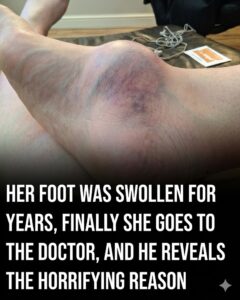
It is incredibly common to dismiss minor bodily changes. A slightly puffy ankle or a foot that feels tight after a long day of standing is often brushed off as a routine consequence of fatigue, temporary fluid buildup, or consuming too much dietary sodium. For many people, elevating the limb for an hour or applying a cold compress seems like an adequate remedy. However, when physical distortions persist for months or even years, what appears to be a benign inconvenience can transform into a profound medical emergency.
The physical human body possesses complex internal networks that rely on precise pressure gradients, clear pathways, and constant metabolic balance. When an individual experiences long-term structural changes in their lower extremities, it is rarely a localized issue. Instead, it serves as a critical warning sign from deep within the physiological framework.
This comprehensive medical guide explores the dangerous, underlying systemic issues that cause chronic lower limb distortion, explaining exactly why ignoring these warning signs can have catastrophic consequences for long-term health.
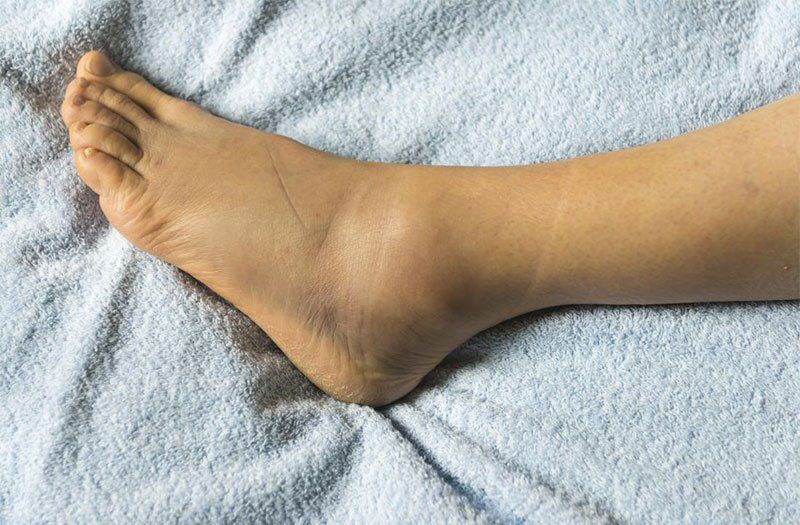
To understand why chronic lower limb distortion is so dangerous, it is essential to explore how the human body manages fluid balance. Fluid accumulation in the tissues of the lower extremities is clinically termed peripheral edema. Under normal anatomical conditions, the cardiovascular and lymphatic systems work in perfect harmony to circulate blood and interstitial fluid throughout the body.
When blood is pumped from the heart, it travels down to the feet through the arterial system. Once the tissues absorb oxygen and vital nutrients, the deoxygenated blood and remaining fluid must travel back up against the powerful pull of gravity. The body achieves this through two primary mechanisms:
The Calf Muscle Pump: Walking and moving forces the muscles in the lower leg to contract, squeezing the deep vessels and pushing blood upward.
Unidirectional Intravascular Valves: Small, flap-like structures inside the vessels open to let blood pass through and snap shut to prevent fluid from pooling downward.
When either of these mechanisms fails, or when systemic pressure rises drastically, fluid is forced out of the microscopic capillary walls and into the surrounding subcutaneous tissues. This is what creates the visibly dense, bruised, or heavily distorted appearance seen in advanced medical cases.
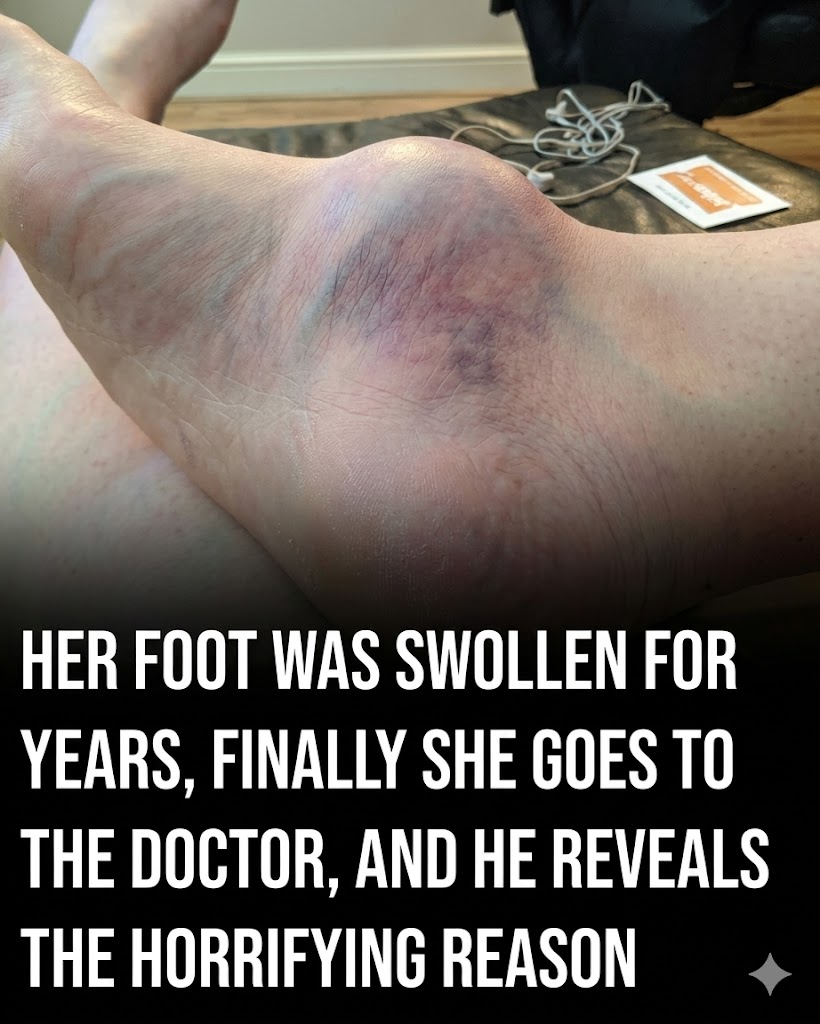
When lower limb changes remain unaddressed for years, they usually point to a serious malfunction in a major organ system. Below are the five most critical diagnoses that medical professionals discover during comprehensive clinical evaluations.
One of the most immediate and life-threatening causes of severe localized lower limb distortion is a Deep Vein Thrombosis. This occurs when an internal blood clot develops within the deep venous pathways of the leg.
The Mechanism: The clot acts as a physical barrier, completely obstructing the upward movement of blood. As a result, intravascular pressure sky-rockets, forcing massive amounts of fluid into the foot and ankle tissues.
The Secondary Stage: If a clot goes untreated, it can lead to Post-Thrombotic Syndrome and Chronic Venous Insufficiency. Over time, the internal valves become completely destroyed, causing blood to permanently pool in the lower limb. This leads to severe dark discoloration, dense tissue texture, and agonizing internal pressure.
The Ultimate Risk: If a portion of that internal blood clot breaks free, it can travel through the bloodstream directly into the lungs, causing a fatal Pulmonary Embolism (PE).
The heart is the central pump of the entire circulatory network. When the cardiac muscles become weak or stiff due to underlying disease, the heart loses its ability to pump blood effectively throughout the body.
Clinical Insight: In cases of right-sided heart failure, the heart cannot efficiently manage the blood returning from the body. This causes a massive backup of pressure throughout the entire venous system.
Because gravity naturally pulls fluid down to the lowest point of the body, the feet and ankles are the very first areas to show severe, persistent swelling. If the cardiac output continues to decline over months and years, the fluid retention will steadily move upward into the calves, thighs, and eventually the abdominal cavity.
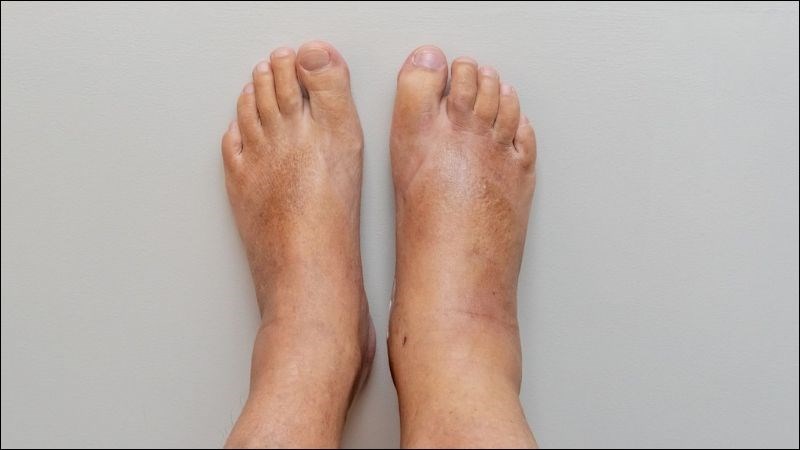
The kidneys are responsible for filtering waste products, toxins, and excess fluids from the bloodstream. They maintain a strict balance of water and essential minerals, such as sodium and potassium.
When an individual suffers from chronic kidney disease or renal failure, the filtering units lose their functional capacity. This leads to:
Massive Fluid Retention: The body cannot eliminate enough water through urination, causing global fluid volume to expand drastically.
Severe Protein Leakage: Damaged kidneys allow vital proteins, such as albumin, to leak out into the urine. Albumin is responsible for keeping fluid inside the blood vessels. Without enough protein in the blood, fluid leaks rapidly out of the vessels and settles directly into the lower limbs.
Persistent lower extremity distortion can also be a primary indicator of advanced liver scarring, known as cirrhosis. The liver is the sole factory responsible for producing albumin.
When liver tissue is heavily damaged by long-term metabolic issues, infections, or cellular stress, its protein-manufacturing capabilities collapse. The profound lack of albumin lowers the oncotic pressure within the circulatory system, leading to widespread fluid leakage. Additionally, scarred liver tissue blocks normal blood flow through the hepatic portal system, creating immense backward pressure that forces fluid to pool heavily in the lower half of the body.
The lymphatic system is a vital secondary drainage network that collects excess fluid from tissues and returns it to the bloodstream. If the lymph nodes or vessels in the pelvis or groin become damaged, blocked, or structurally compromised, the fluid drainage route is completely severed.
Unlike standard fluid retention, lymphedema involves a buildup of protein-rich fluid. Over years of neglect, this specific type of fluid causes chronic tissue inflammation, leading to severe thickening of the skin, deep structural distortion, and a highly elevated risk of dangerous bacterial skin infections.
It is vital to distinguish between a harmless, temporary physical reaction and a major underlying disease process. The table below outlines the primary clinical differences:
| Diagnostic Feature | Temporary Fluid Accumulation | Chronic Systemic Pathology |
| Duration | Resolves completely within 12 to 24 hours of rest. | Persists for weeks, months, or years without improvement. |
| Symmetry | Usually occurs equally in both feet and ankles. | Often highly asymmetrical, disproportionately affecting one side. |
| Skin Texture | Skin remains soft, pliable, and normal in color. | Skin becomes thick, hard, hyperpigmented, or heavily bruised. |
| Pain Levels | Characterized by mild tiredness or heavy sensations. | Features deep throbbing pain, sharp tenderness, or burning heat. |
| Response to Elevation | Swelling decreases significantly when legs are raised. | Swelling shows minimal to no reduction even after prolonged elevation. |
If you or a loved one are experiencing persistent structural changes in the lower extremities, it is critical to monitor for specific red flags. The presence of any of the following secondary symptoms indicates that the situation requires immediate medical intervention:
Unilateral Alterations: Extreme structural changes or heavy swelling that occurs in only one foot or leg, which strongly points to a localized vascular blockage like a deep blood clot.
Localized Warmth and Redness: The affected skin feels hot to the touch, looks intensely red, or shows dark tracking lines, indicating a fast-spreading bacterial infection.
Significant Skin Discoloration: The lower leg and ankle develop a dark brown, deep purple, or heavily bruised appearance due to red blood cells leaking out of the vessels and staining the tissue.
Open Sores or Ulcerations: The skin becomes so tightly stretched and malnourished that it breaks open, forming slow-healing wounds that easily introduce dangerous pathogens.
Systemic Complications: The physical foot changes are accompanied by shortness of breath, sudden chest discomfort, chronic fatigue, or extreme difficulty breathing while lying flat in bed.
When a patient finally seeks help for chronic lower limb distortion, medical specialists utilize an array of sophisticated diagnostic tools to pinpoint the exact physiological breakdown. A typical clinical investigation involves several key phases:
Physicians will order specialized laboratory panels to analyze organ performance. This includes renal function tests to check filtration efficiency, hepatic metabolic panels to evaluate protein synthesis, and cardiac biomarker evaluations to check for signs of heart failure.
To check for deep vascular obstructions, doctors perform a Venous Duplex Ultrasound. This non-invasive imaging technique uses high-frequency sound waves to map out blood flow through the deep veins, allowing technicians to immediately locate any hidden blood clots or damaged internal valves.
Once the underlying pathology is discovered, a precise medical management plan is initiated.
[Diagnosed Cause] --------> [Targeted Medical Treatment]
  |                           |
  +--> Heart Failure  ------> Diuretics & Inotropic Medications
  +--> Deep Blood Clot -----> Anticoagulant Therapy & Clot Dissolvers
  +--> Vein Compression ----> Minimally Invasive Endovascular Stenting
For advanced vascular blockages, interventional cardiologists can utilize minimally invasive techniques, such as inserting an endovascular stent into compressed pelvic veins to permanently restore normal venous drainage.
While long-standing medical issues require professional clinical intervention, implementing healthy daily habits can significantly enhance circulatory efficiency and protect the vascular network from premature decline.
Avoid sitting or standing in a fixed position for hours at a time. Make a conscious effort to walk for at least 5 to 10 minutes every hour. Engaging in regular physical activity, such as swimming, cycling, or brisk walking, keeps the calf muscle pump active, ensuring that deoxygenated blood is continuously forced back up toward the heart.
Excessive dietary sodium forces the body to retain massive amounts of unnecessary fluid, putting severe strain on the cardiovascular and renal systems. Transition to a nutrient-dense, whole-food diet rich in fresh vegetables, lean proteins, and complex carbohydrates to naturally support systemic fluid balance.
For individuals who struggle with mild venous sluggishness or work in professions that require prolonged standing, wearing properly fitted, medical-grade compression socks can be incredibly beneficial. These garments apply graduated external pressure to the lower limb tissues, preventing fluid from leaking out of the capillaries and ensuring efficient blood flow back to the heart.
The human body is an incredibly interconnected organism. A persistent structural change in the foot or ankle is never a localized cosmetic issue to be hidden away or ignored. Whether it is a silent vascular blockage, an overworked heart, or struggling kidneys, chronic lower extremity distortion is a profound cry for help from your internal organ systems.
If you notice ongoing, unexplained changes in your lower extremities, do not wait for the situation to escalate into a severe medical crisis. Prioritize your long-term health, consult with a qualified medical professional, and address the root cause before it is too late.
5 Things You Should Never Throw Away After a Loved One Dies Losing someone close to you brings a wave…
Child Skin Health: Decoding Ring-Shaped Marks On The Neck When a parent notices unusual textures or shapes on their little…
For generations across many Asian cultures, snakes have never been seen as ordinary animals. Beyond fear and danger, they are…
When a Simple Swelling Conceals a Life-Threatening Medical Emergency It is incredibly common to dismiss minor bodily changes. A slightly…

Losing a person who held a significant place in your life alters your world forever. The journey through mourning is…

When it comes to personal hygiene, everyone seems to have a definitive opinion. Some people wouldn’t dream of starting their…