The Hidden Science Behind Modern Bath Tissue
The Hidden Science Behind Modern Bath Tissue
Every day, billions of people rely on standard commercial paper rolls for personal hygiene without giving the manufacturing process a second thought. However, recent developments in environmental health science have turned the spotlight toward the everyday items found in our bathrooms. While modern convenience emphasizes softness, strength, and ultra-white aesthetics, the chemical pathways required to achieve these traits are sparking intense debate among researchers.
To understand the core of the issue, one must look at the transition from raw timber to the final soft product. The manufacturing network relies heavily on structural integrity, moisture resistance, and cosmetic perfection. Achieving these characteristics often involves complex chemical processing, raising valid questions about what remains on the fibers after production is complete.
Evaluating the 2023 University of Florida Findings
The widespread conversation regarding personal care paper safety escalated significantly following a landmark 2023 study conducted by environmental engineering researchers at the University of Florida.
Understanding the Study’s Scope
Published in Environmental Science & Technology Letters, the research team analyzed paper tissue rolls collected from diverse regions across the globe, including North America, Western Europe, Africa, and South America. Additionally, they cross-examined wastewater sludge samples from multiple treatment facilities.
Key Finding: The Prevalence of 6:2 diPAP
The study identified the presence of specific compounds known as per- and polyfluoroalkyl substances (PFAS), specifically 6:2 fluorotelomer phosphate diester (6:2 diPAP).
-
This specific compound accounted for the vast majority of the synthetic traces detected in the paper samples.
-
The data indicated that these compounds are likely introduced unintentionally during the manufacturing process—potentially used as lubricants or anti-sticking agents on the large machinery that handles wet paper pulp.
Environmental Impact vs. Direct Human Exposure
It is critical to distinguish between environmental accumulation and direct health hazards. The primary conclusion of the University of Florida study was that flushing personal care paper acts as a significant conduit for these “forever chemicals” to enter municipal wastewater networks, where they resist breakdown and enter the broader ecosystem. The study did not directly measure or evaluate the immediate biological impact or absorption rate through dermal contact during daily use.
Decoupling Fact from Fiction: Sensationalism Online
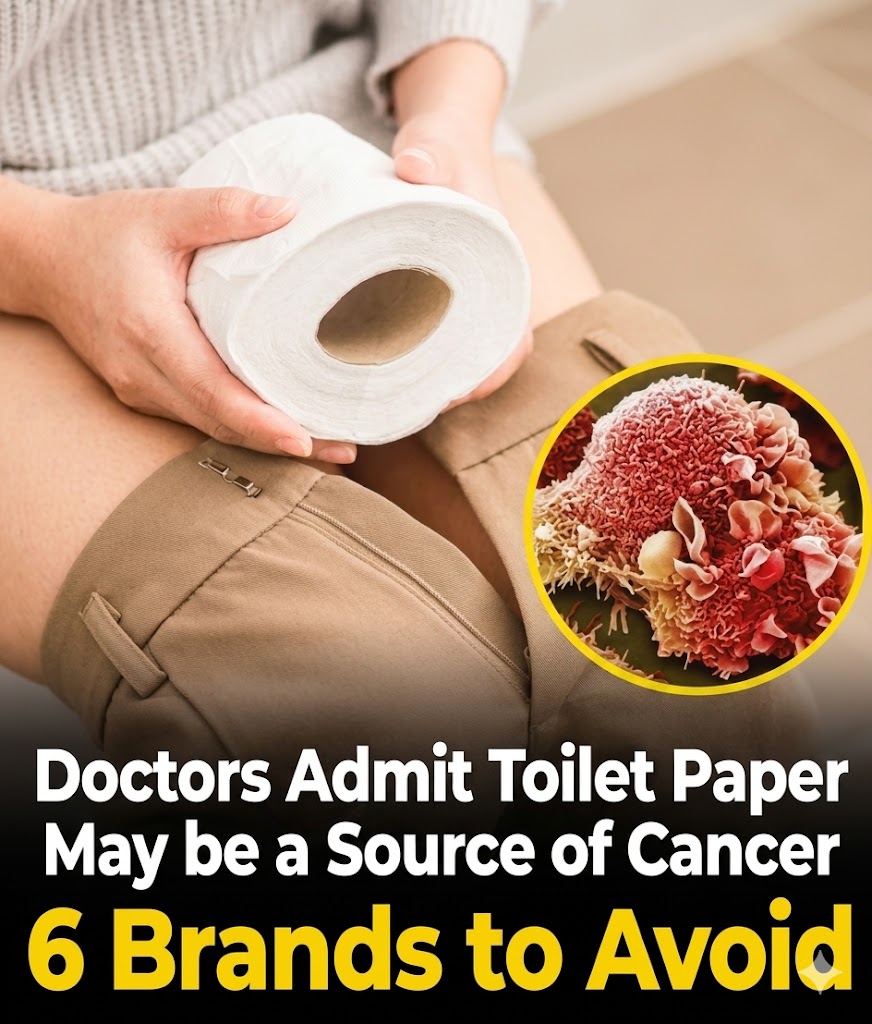
In the digital era, scientific literature is frequently translated into social media headlines that prioritize engagement over nuanced accuracy. The viral image claiming that “doctors admit” a direct causal link to cell mutations is a classic example of informational distortion.
| What the Science Says |
What Viral Headlines Claim |
| Traces of 6:2 diPAP are present due to manufacturing machinery lubricants. |
“Brands are deliberately adding toxic compounds for absorption.” |
| Paper disposal contributes to synthetic chemical loads in municipal sewage systems. |
“Direct everyday usage is an immediate, confirmed trigger for illness.” |
| Research omitted specific brand testing names to focus on systemic industry processes. |
“Here is a definitive list of specific brands you must immediately avoid.” |
Sensationalist content often creates an authoritative narrative (“Doctors Admit”) without providing verifiable medical consensus or direct citations. Medical professionals emphasize that systemic exposure comes from various environmental vectors—such as contaminated drinking water, grease-resistant food packaging, and consumer textiles—rather than a single personal hygiene source.
Understanding the Chemical Footprint of Paper Production
Beyond the discussion of industrial lubricants, standard paper refinement involves several chemical treatments designed to maximize shelf appeal. Individuals seeking to minimize their chemical footprint should be aware of the following industrial elements:
1. Elemental Chlorine and Bleaching Agents
To transform dark wood pulp into a pristine white hue, manufacturers historically utilized elemental chlorine. This process can generate trace amounts of dioxins, which are highly persistent environmental pollutants. While many modern facilities have transitioned to Elemental Chlorine-Free (ECF) or Totally Chlorine-Free (TCF) processes, residual byproducts remain a focal point of environmental monitoring.
2. Wet-Strength Additives
To prevent a sheet from disintegrating instantly upon contact with moisture, industrial formulas often incorporate specialized resins. Some of these structural agents can contain trace amounts of formaldehyde or related chemical stabilizers, which serve to preserve the integrity of the fiber grid under stress.
3. Artificial Fragrances and Lotions
Products marketed as “ultra-soft,” “soothing,” or “scented” frequently feature topical treatments containing synthetic perfumes, mineral oils, or paraffin wax. For individuals with compromised skin barriers or high chemical sensitivities, these additives can act as direct topical irritants.
Practical Alternatives for Conscious Households
For consumers looking to reduce potential exposure to industrial processing agents and minimize their environmental footprint, several viable alternatives exist in the modern marketplace.
Transitioning to Bamboo Fiber
Bamboo functions as a highly sustainable alternative to traditional tree pulp. Because bamboo grows rapidly and possesses natural structural strength, the manufacturing process typically requires fewer synthetic binding agents and structural reinforcers to achieve a reliable texture.
Emphasizing Unbleached, TCF-Certified Products
When purchasing standard paper goods, looking for specific third-party verifications can significantly lower chemical exposure. Prioritize packages explicitly labeled as:
-
Totally Chlorine-Free (TCF): Guarantees that no chlorine derivatives were utilized in the whitening process.
-
Unbleached / Natural Brown: Eliminates the whitening stage entirely, ensuring the fiber remains closer to its natural state.
Utilizing Modern Washing Systems
One of the most efficient ways to reduce reliance on manufactured paper goods altogether is the integration of mechanical washing units, such as bidets. By utilizing water as the primary cleansing mechanism, households drastically decrease their consumption of paper rolls, thereby lowering both environmental chemical contributions and potential topical exposure to industrial residues.