
Early Signs of Dementia: Body Changes You Should Never Ignore
Dementia does not usually appear overnight. In many people, the condition develops gradually, with subtle changes that may begin months…
04/08/2026 15:50
If you have ever baked, roasted, or pan-seared a chicken breast only to discover a milky white, slightly rubbery substance oozing onto the pan, you are not alone. It is one of the most common questions home cooks ask when preparing poultry. Is it fat? Is it a additive or chemical injected by meat processors? Is the meat unsafe to eat?
The short answer is simple: it is completely harmless protein, known primarily as albumin.
In this comprehensive guide, we will break down the science behind why this white substance appears, what it means for your meal, how meat processing affects it, and the best culinary techniques to minimize it for perfectly juicy, appetizing chicken every time.
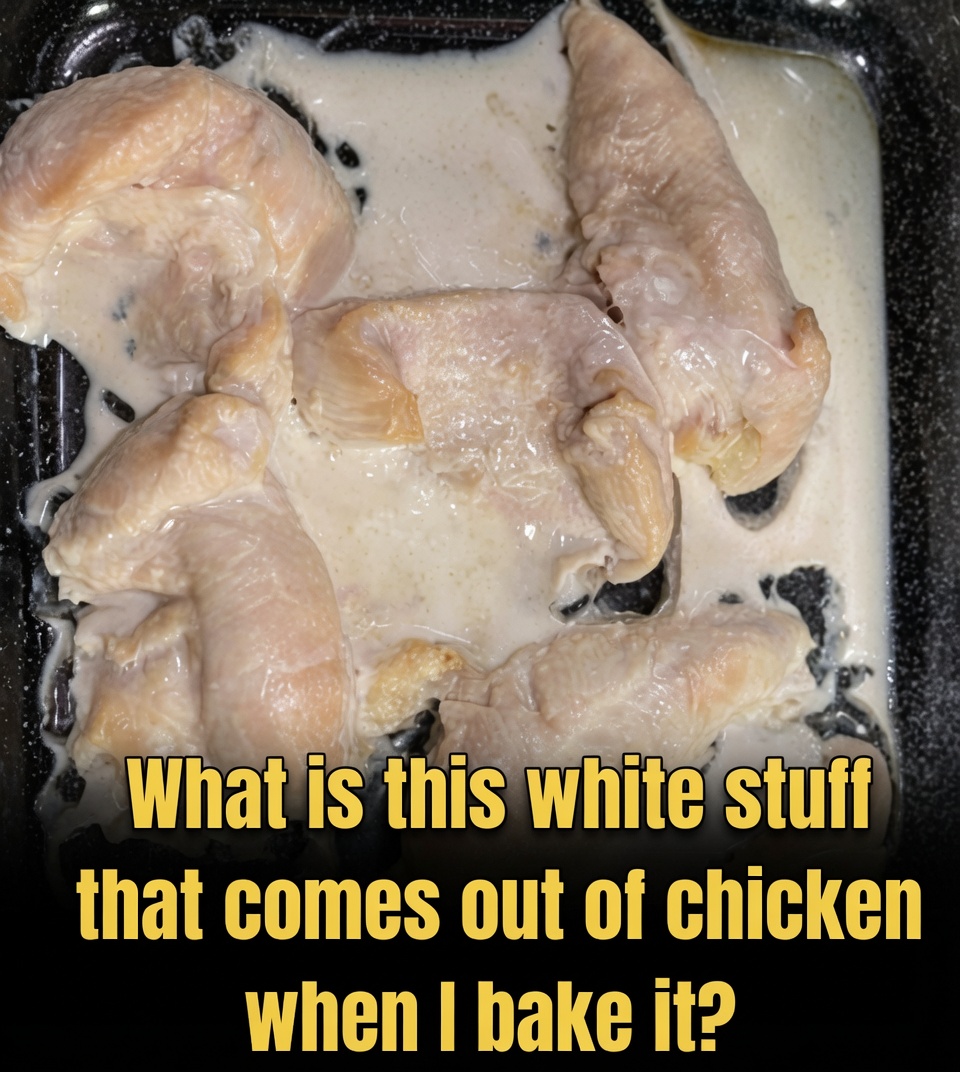
The white substance that leaks out of chicken as it cooks is primarily albumin, a naturally occurring water-soluble protein found inside the muscle fibers of poultry.
When poultry is raw, this protein is dissolved within the water content of the muscle tissue. However, as heat is applied during cooking, two key physical transformations take place:
Muscle Fiber Contraction: Heat causes the protein fibers within the chicken breast or thigh to contract tightly. As these fibers tighten, they squeeze out moisture and dissolved soluble proteins.
Protein Coagulation: As the extruded moisture heats up, the dissolved protein (albumin) solidifies or “coagulates,” changing from a translucent liquid into an opaque, white, gel-like or rubbery substance.
This exact same chemical reaction happens when you cook an egg. The clear egg white turns solid and bright white when exposed to heat because egg whites are also predominantly composed of albumin.
A common misconception is that the white ooze is melted fat or synthetic additives injected into industrial poultry.
Is it fat? No. Animal fat liquefies under heat and turns into a clear or yellow oil. Albumin, on the other hand, sets into a firm, white solid.
Is it harmful or toxic? Not at all. Albumin is pure protein and is 100% safe to eat, though many people dislike its rubbery texture and unappealing visual appearance.
Are added liquids to blame? Partially. Many store-bought poultry products are pre-treated with a solution of water, salt, and broth (often labeled as “retained water” or “plumped”). While this added liquid isn’t the protein itself, higher water content means more fluid is forced out during cooking, bringing dissolved albumin along with it.
You might notice that organic, pasture-raised, or air-chilled chicken often exhibits less white ooze than standard mass-market poultry. Several factors influence how much albumin escapes during the cooking process:
Subjecting chicken to sudden, extreme heat causes the muscle fibers to contract violently. This rapid squeezing pushes out a high volume of liquid and albumin very quickly.
During commercial processing, poultry must be chilled rapidly after harvesting.
Water-chilled chicken is submerged in large ice-water baths. The meat absorbs extra water (often 8% to 12% of its body weight). When heated, this excess water rapidly exits the muscle tissue, carrying albumin to the surface.
Air-chilled chicken is cooled by cold air currents without added moisture. Because it contains less surface liquid, it yields significantly less white residue and browns much better.
Freezing creates tiny ice crystals within the muscle tissue. These crystals act like tiny knives that pierce the cell walls. When frozen chicken thaws and cooks, the damaged cell structure allows moisture and dissolved proteins to escape far more easily than in fresh meat.
While albumin is natural, you can easily minimize or eliminate it using proper kitchen prep and cooking methods.
Cook chicken at a moderate, steady temperature. Gently searing or roasting allows muscle fibers to contract gradually, keeping more moisture and protein trapped inside the meat fibers.
Brining is one of the most effective ways to keep poultry juicy while reducing protein leakage:
Wet Brine: Soaking chicken in a light water-and-salt solution alters the structure of the outer muscle proteins. This enables the meat to retain moisture better during cooking.
Dry Brine: Rubbing salt over the surface 30 to 60 minutes before cooking dissolves surface proteins early, creating a protective barrier that seals in juices.
Always dry the surface of raw poultry thoroughly with paper towels before cooking. Removing excess moisture prevents steam from forming on the surface, allowing for better searing and reducing surface protein buildup.
Use a meat thermometer to monitor internal temperature. Remove chicken from heat as soon as it reaches 165°F (74°C) at the thickest part. Overcooking forces out maximum moisture and results in dry meat covered in white residue.
Whenever possible, opt for air-chilled poultry. While it may cost slightly more per pound, you are paying for actual meat rather than absorbed water weight, resulting in cleaner presentation and superior flavor.
If you don’t like how it looks or its texture, feel free to scrape or wipe it off with a spoon or paper towel before serving. It will not affect the taste or quality of the remaining meat.
No. The appearance of albumin has nothing to do with freshness or spoilage. Check for unpleasant odors, slimy texture, or discoloration to determine freshness instead.
Yes! Salmon, turkey, and pork also contain high amounts of soluble protein that can coagulate on the surface when cooked too quickly or at high temperatures.
Seeing white stuff appear on your cooked chicken can be surprising, but it is a natural, safe result of protein coagulation. By choosing air-chilled poultry, brining before cooking, and managing your cooking temperatures, you can eliminate unsightly albumin and enjoy tender, juicy, perfectly prepared chicken every time.
Dementia does not usually appear overnight. In many people, the condition develops gradually, with subtle changes that may begin months…
If you have ever baked, roasted, or pan-seared a chicken breast only to discover a milky white, slightly rubbery substance…

Most modern bathrooms feature a dual-flush toilet system equipped with two distinct buttons at the top of the tank. While…

Do you ever pull freshly washed clothes out of your laundry drum only to realize they do not smell as…
Fresh strawberries are one of the most loved summer fruits across the world. Vibrant, juicy, and naturally sweet, they make…
Every parent knows the feeling of discovering forgotten items in a teenager’s room. From missing socks to old school assignments,…