The Silent Midnight Disturbance: An Educational Guide to Understanding Pinworms in Children
A peaceful night of rest is fundamental for a child’s development, growth, and daytime energy. However, many families encounter a common, frustrating disruption that occurs almost exclusively after the lights go out: intense localized itching that leaves children restless, irritable, and unable to settle into deep sleep.
When a young child frequently fusses or scratches during the late evening hours, parents often look for environmental factors like room temperature, fabric sensitivity, or standard skin conditions. Yet, one of the most frequent culprits behind this specific nighttime issue is a microscopic, highly transmissible organism known as the pinworm (Enterobius vermicularis).
This comprehensive educational guide explores the biological mechanisms behind this common issue, explains why the discomfort peaks during resting hours, outlines clear identification methods, and provides evidence-based hygiene protocols to help families restore comfort and maintain a clean household environment.
1. What Are Pinworms? Understanding the Biology
To address the issue effectively, it is essential to understand exactly what these organisms are and how they interact with the human body.
Defining the Organism
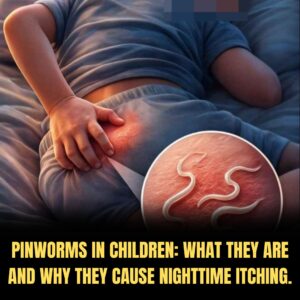
Pinworms are tiny, white, thread-like nematodes (roundworms) that temporarily inhabit the human gastrointestinal system. They are exceptionally small, typically measuring between 2 to 13 millimeters in length—roughly the length of a staple or a small piece of thread. The female organisms are generally larger than the males and possess a distinct, pointed tail, which gives them their common name.
A Common Childhood Occurrence
It is important for parents to realize that this issue is remarkably common and does not indicate a lack of cleanliness or poor parental care. Millions of cases occur worldwide every year, particularly among children aged 5 to 10. The high prevalence in this age group is primarily due to their close contact in group settings, such as childcare centers, preschools, and elementary classrooms, combined with developing personal hygiene habits.
Specificity to Humans
A common misconception is that household pets, such as dogs or cats, can transmit or carry these specific roundworms. In reality, Enterobius vermicularis is an exclusively human-hosted organism. Pets cannot catch them, nor can they pass them to children. The cycle relies entirely on human-to-human transmission.
2. Why the Itching Monopolizes the Nighttime Hours

The most defining characteristic of a pinworm presence is that the primary symptom—intense localized itching around the lower pelvic and gluteal region—occurs almost exclusively at night. This timing is not coincidental; it is directly tied to the biological reproductive cycle of the organism.
The Nocturnal Migration
During the daytime, the adult organisms reside quietly in the upper parts of the large intestine, where they feed and mate. However, when the host’s body enters a state of rest during sleep, the internal environment changes. The reduction in host movement, combined with the warmth of the bedding, signals the gravid (pregnant) female organisms to migrate downward through the digestive tract.
Egg Deposition and the Irritating Secretion
Once the female reaches the external exit of the digestive tract, she emerges onto the delicate skin surrounding the perianal area. Here, she deposits thousands of microscopic eggs. To ensure the eggs adhere to the skin surface, the female releases a specific, gelatinous fluid.
This sticky fluid contains highly irritating substances that trigger a localized inflammatory response on the skin. It is this chemical interaction, combined with the physical movement of the tiny organisms on the skin surface, that creates an intense, tickling, or burning sensation of itchiness.
The Cycle of Transmission
The nocturnal timing of the itch is a sophisticated survival mechanism designed to facilitate transmission:
-
The Reflex: When the child experiences intense irritation during sleep, they subconsciously scratch the affected area.
-
The Transfer: The microscopic, sticky eggs easily transfer from the skin to the child’s fingertips and become lodged beneath the fingernails.
-
The Contamination: The following morning, if the child touches toys, bedding, doorknobs, or food without thorough hand washing, the eggs are distributed into the environment.
-
The Re-ingestion: Because these eggs can survive on surfaces for up to two to three weeks, they are easily picked up by other family members or re-ingested by the child through hand-to-mouth contact, starting the cycle anew.
3. Recognizing the Signs and Verifying the Presence

Because the organisms themselves are small and their eggs are completely invisible to the naked eye, identifying a pinworm presence requires careful observation of behavioral changes and physical verification.
Key Visual and Behavioral Indicators
-
Frequent Night Waking: A child who previously slept through the night may suddenly begin waking up frequently, crying, or tossing and turning Restlessly.
-
Persistent Scratching: Noticeable, repetitive scratching or shifting of position during the evening or early morning hours.
-
Irritability and Fatigue: Due to disrupted sleep cycles, children may exhibit daytime behavioral changes, including uncharacteristic irritability, poor concentration, or daytime lethargy.
-
Localized Skin Redness: Constant scratching can lead to secondary skin irritation, redness, or mild chafing in the perianal region.
Verification Methods
If a parent suspects a pinworm presence based on nighttime behavior, there are two primary methods used to confirm it:
1. Visual Inspection during Resting Hours
Because the female organisms emerge when the body is at rest, parents can perform a quick visual check using a flashlight roughly two to three hours after the child has fallen asleep. By gently examining the skin area surrounding the lower digestive tract exit, a parent may occasionally see the tiny, white, thread-like organisms moving on the skin or on the surface of the child’s pajamas.
2. The Standard Cellophane Tape Test
A widely accepted and highly reliable diagnostic method is the cellophane tape test, which is performed immediately upon the child waking up in the morning, prior to any bathing, use of the restroom, or changing of clothes.
| Step |
Action Required |
Rationale |
| Step 1 |
Press a piece of clear, see-through cellophane tape firmly against the skin surrounding the perianal area. |
The sticky surface of the tape captures any microscopic eggs or organism fragments deposited during the night. |
| Step 2 |
Gently remove the tape, keeping the sticky side intact. |
Ensures the collected sample remains undisturbed for evaluation. |
| Step 3 |
Adhere the tape onto a clean glass slide or place it inside a sealed plastic bag as directed by a healthcare professional. |
Prepares the sample for precise microscopic review at a clinical facility to confirm the specific species. |
4. Comprehensive Management and Hygiene Protocols
When a pinworm presence is confirmed, managing the situation requires a dual approach: addressing the existing organisms within the body and executing a thorough environmental hygiene plan to eliminate remaining eggs from the household.
Professional Guidance and Support
A primary healthcare provider or a local pharmacist can recommend appropriate over-the-counter or prescription options designed to eliminate adult roundworms from the digestive tract. These options are highly effective but generally target only the mature organisms, not the eggs. Therefore, a second application is almost always scheduled exactly two weeks later to eliminate any new organisms that may have hatched from eggs ingested just prior to the first application.
5. Environmental Cleansing and Long-Term Prevention
To permanently break the cycle of re-infection, families should implement a structured hygiene routine aimed at removing microscopic eggs from living spaces, fabrics, and surfaces.
Targeted Washing and Laundry Practices
-
Morning Bedding Management: Gather all bed sheets, blankets, pillowcases, and pajamas every morning during the management period. Avoid shaking the bedding when removing it, as shaking can launch the lightweight microscopic eggs into the air, allowing them to settle on carpets, curtains, or furniture.
-
High-Temperature Washing: Wash all collected linens and clothing using the hottest cycle available on your washing machine.
-
High-Heat Drying: Dry the items on a high-heat dryer setting. The combination of intense heat and thorough agitation is highly effective at destroying the viability of pinworm eggs.
Personal Hygiene Adjustments
-
Morning Bathing Routines: Encourage the child to take a warm shower or bath every morning immediately upon waking. Shaving or showering helps rinse away any eggs deposited on the skin overnight. Showers are generally preferred over baths during this period, as showering prevents the child from sitting in water that might contain loosened eggs.
-
Fingernail Maintenance: Keep the child’s fingernails clipped very short and clean them regularly with a small brush. Short nails leave less space for microscopic eggs to lodge during accidental nighttime scratching.
-
The Anti-Scratching Protocol: Encourage the child to avoid direct skin contact by ensuring they wear snug-fitting, one-piece pajamas or secure undergarments to bed, which acts as a physical barrier.
Environmental Sanitation
-
High-Touch Surface Cleansing: Periodically wipe down common household surfaces that children touch frequently. Focus on doorknobs, light switches, faucet handles, toilet flush levers, and shared toys using standard household cleaning solutions.
-
Thorough Vacuuming: Vacuum bedroom carpets, rugs, and surrounding mattress areas thoroughly to pick up any eggs that may have drifted.
-
Utilize Natural Sunlight: Pinworm eggs are sensitive to environmental factors, and natural light can reduce their survival rates. Open curtains and window blinds in bedrooms during daytime hours to let ample sunlight illuminate the indoor spaces.
Summary: Restoring Peace of Mind and Restful Nights
Discovering a pinworm presence can initially feel overwhelming or stressful for parents, but understanding the simple biology behind the condition provides clarity and reassurance. The intense nighttime itching is merely a mechanical result of the organism’s nocturnal reproductive cycle, and it can be fully resolved with systematic care.
By combining professional, coordinated household guidance with strict adherence to handwashing, high-heat laundry routines, and proactive nail care, families can swiftly eliminate the organisms, safeguard their home environment, and successfully restore quiet, uninterrupted, and restful sleep for their children.