
The Avocado Phenomenon: Superfood or Hidden Risk?
The Avocado Phenomenon: Superfood or Hidden Risk? For the past decade, few foods have enjoyed the meteoric rise to fame…
19/05/2026 18:02
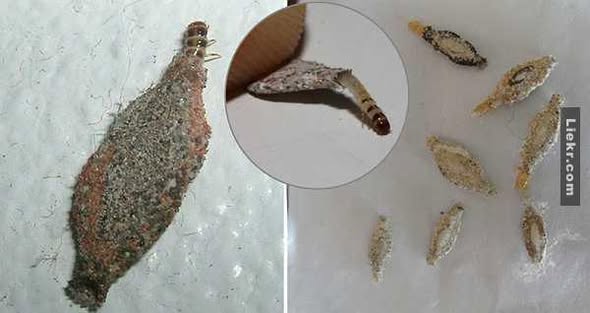
The plaster bagworm is not a worm at all; it is the larval (caterpillar) stage of a very small, inconspicuous greyish-brown moth.
The Case: As soon as the larva hatches, it spins a protective, spindle-shaped silk case around itself.
The Camouflage: To camouflage its home, the larva attaches tiny fragments of environmental debris to the outside of the silk bag, such as sand, plaster dust, lint, hair, and soil. This makes the case look like a random scrap of dirt or a thick seed.
Movement: The case is open at both ends. The caterpillar can poke its dark brown head out of either side to walk, pulling its heavy protective home behind it as it climbs up walls, baseboards, and ceilings.
Transformation: Once the larva reaches maturity, it anchors the case securely to a flat surface and seals it to pupate. A few weeks later, a tiny adult moth emerges, leaving the empty, dry casing stuck to your wall.
Plaster bagworms thrive in environments with high humidity and warm temperatures. They are particularly common in tropical regions, coastal areas, and southern climates. Inside a home, they gravitate toward quiet, dark, and undisturbed zones where their food sources accumulate. You are most likely to find them in:
Garages and carports
Basements and crawl spaces
Bathrooms and laundry rooms
Closets, corners of ceilings, and underneath large furniture
Let us address the most alarming part of the viral image: the severe, red, bumpy reaction covering a person’s back.
The Verdict: The image is completely misleading. Plaster bagworms do not cause severe skin reactions, nor do they bite or sting.
The visual connection between the insect cases and the skin reaction is an example of online sensationalism.
They Are Non-Aggressive: Plaster bagworm larvae have absolutely no mechanism to bite or sting humans. They lack venom, stingers, or defensive jaws capable of piercing human skin.
They Do Not Transmit Pathogens: These insects do not carry or spread diseases to humans or household pets.
What is the Skin Condition in the Photo? The skin reaction shown in the image is characteristic of systemic hives (urticaria), a severe allergic reaction to food or medication, or contact dermatitis from an entirely unrelated source (such as contact with stinging caterpillars like the buck moth or flannel moth caterpillar, which possess venomous spines). Plaster bagworms do not possess these stinging hairs.

While they are fundamentally harmless to humans, a massive, unchecked infestation could theoretically contribute to minor environmental discomfort for highly sensitive individuals. Because their casings incorporate household dust, pet dander, and wild spider webs, people with severe dust allergies or asthma might experience standard respiratory symptoms if dust levels in the home are exceptionally high. However, direct physical harm from the insect itself is non-existent.
While you do not need to worry about your skin, you should not ignore these little creatures entirely. Plaster bagworms are considered household pests because of their dietary habits. They are structural opportunists that feed on organic materials, which can lead to property damage if left unmanaged.
The primary diet of a plaster bagworm larva consists of natural fibers containing keratin, a protein found in animal products. If they make their way into your wardrobe or onto your floors, they can chew irregular holes through expensive household items. Materials at risk include:
Woolen carpets, rugs, and sweaters
Silk garments and curtains
Fur coats and trimmings
Feathers, pillows, and taxidermy specimens
They generally avoid synthetic fabrics like nylon, polyester, and clean cotton, unless those fabrics are heavily stained with sweat, body oils, or food spills.
When natural fabrics are not available, plaster bagworms survive by acting as nature’s clean-up crew. They feed on:
Discarded spider webs (one of their absolute favorite foods)
Dried insect carcasses
Accumulated human hair and pet dander
Dust and lint
When thousands of these larvae crawl up light-colored plaster, stucco, or drywall to pupate, they attach their silk cases firmly to the surface. When you pull the old, abandoned cases off the walls, they can leave behind stubborn silk residues, pull away loose paint flakes, or leave small, unsightly marks that require cleaning or repainting.
If you have spotted a few of these oval bags around your house, there is no need to panic or spray heavy chemical treatments everywhere. Because the larvae are protected inside tough, insulated silk cases, standard chemical sprays are often ineffective. The most successful approach relies on physical removal and modifying the environment.
Follow this step-by-step eradication strategy:
The quickest and most efficient way to handle an active population is manual removal.
Take a vacuum cleaner equipped with a hose and a brush attachment.
Carefully vacuum every visible case off the walls, ceilings, baseboards, and from behind furniture.
Ensure you check dark corners, window frames, and the joints where walls meet the ceiling.
Important: Once finished, immediately empty the vacuum canister or discard the vacuum bag into an outdoor trash bin. If left inside the vacuum, the larvae can simply crawl back out.
Plaster bagworms cannot survive without a steady source of nutrients. By keeping a spotless environment, you starve them out.
Use a long-handled duster or vacuum to sweep away all cobwebs and spider webs from corners, ceilings, and under furniture.
Vacuum floors, rugs, and carpets regularly to eliminate accumulated pet hair, human hair, dander, and lint.
Pay close attention to dead zones—such as spaces beneath beds, behind heavy appliances, and inside closets—where dust bunnies gather undisturbed.
Because these insects require high moisture levels to thrive and develop, lowering your home’s humidity is an incredibly effective natural deterrent.
Use air conditioners or dehumidifiers to keep indoor humidity levels well below $50\%$.
Improve air circulation in prone areas like basements, attics, and laundry rooms by using ceiling fans or opening windows on dry days.
Repair any minor plumbing leaks or moisture seeps in walls that could be creating localized damp zones.
To keep your clothing and upholstery safe from hungry larvae, take proactive storage measures:
Launder vulnerable garments thoroughly or have them dry-cleaned before storing them away for the season. Larvae are highly attracted to soiled clothes.
Store precious woolens, silks, and furs in airtight plastic storage containers or vacuum-sealed space bags rather than leaving them loose on shelves.
Clean out closets periodically, airing out the space and wiping down shelves to ensure no hidden larvae are establishing a colony.
To help you remember how to handle this common household issue, let us summarize the reality of the plaster bagworm versus the internet rumors:
| Feature | Internet Myth | Scientific Fact |
| Health Danger | Causes severe, blistering skin rashes and painful bites. | Completely harmless to humans; cannot bite, sting, or spread disease. |
| Dietary Focus | Eats structural plaster, drywall, and wood. | Feeds on spider webs, hair, dust, lint, and natural fibers like wool and silk. |
| Primary Risk | Requires emergency medical attention and evacuation. | Causes cosmetic damage to walls and holes in natural clothing or carpets. |
| Best Control Method | Heavy chemical pesticide spraying. | Physical removal via vacuuming and lowering indoor humidity. |
The internet is full of sensationalized warnings designed to capture attention through fear, and the viral post combining plaster bagworms with a terrifying skin rash is a prime example.
While discovering these tiny, debris-covered cocoons on your walls can be a bit unsettling, you can breathe a sigh of relief knowing that your health is completely secure. They do not pose any physical threat to you, your children, or your pets.
Instead of worrying about a medical emergency, view the appearance of plaster bagworms as a helpful indicator from nature. They are letting you know that a specific area of your home has a bit too much dust, a few too many spider webs, or an elevated level of humidity. By simply pulling out the vacuum cleaner, clearing away old cobwebs, and running a dehumidifier, you can easily protect your natural fabrics, clean up your walls, and keep your living space completely pest-free.
The Avocado Phenomenon: Superfood or Hidden Risk? For the past decade, few foods have enjoyed the meteoric rise to fame…

Rest Better Tonight: Banana Benefits The modern evening routine is often filled with screen time, late-work stress, and endless scrolling.…
What Are Those Small Oval-Shaped Bags on Your Walls? The Lifecycle of a Household Casebearer The plaster bagworm is not…

Understanding Gut Health: The Truth About Refrigerator Storage, Modern Diets, and Cellular Protection In recent years, global healthcare discussions have…

A Mother’s Worst Nightmare Turned Shocking Reality When a child experiences unusual changes in her body, a mother’s natural instinct…
The Truth About Red Tilapia: What You Need to Know Before Your Next Meal In recent months, a wave of…