The Ultimate Guide: How to Get Rid of Gnats in the Kitchen Forever
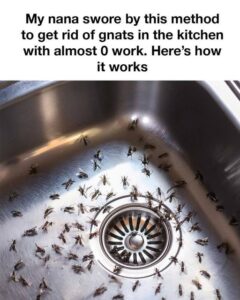
Have you ever walked into your kitchen, ready to prepare a delicious meal or simply grab a glass of water, only to be greeted by a swarm of tiny, erratic flying insects? If you are dealing with this frustrating scenario, you are certainly not alone. Kitchen gnats are a universal nuisance, seemingly appearing out of nowhere and multiplying at an astonishing rate. Recently, viral images and posts about a mysterious “Nana’s trick” to eliminate these pests with almost zero work have taken the internet by storm, often featuring images of kitchen sinks overrun by tiny flies.
This comprehensive guide will uncover the truth behind these traditional remedies, explain the science of why they work, and provide you with a complete, step-by-step masterclass on how to completely eradicate gnats from your kitchen and prevent them from ever returning. Whether they are hovering around your fruit bowl or swarming out of your sink drain, this article is your ultimate resource for a pest-free home.
Understanding the Enemy: What Are Kitchen Gnats?
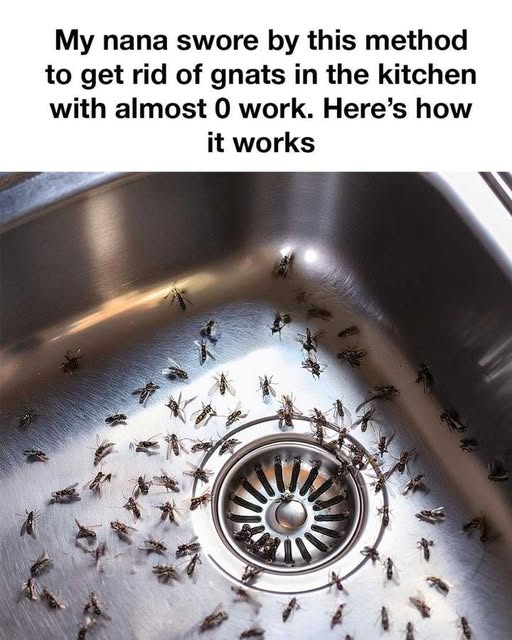
Before you can effectively eliminate a pest, you must understand exactly what you are dealing with. The term “gnat” is often used as a catch-all phrase for several different types of tiny flying insects. In the context of a kitchen, you are usually dealing with one of three distinct culprits. Identifying which one has invaded your space is the crucial first step in choosing the right eradication method.
1. Fruit Flies (Drosophila melanogaster)
Fruit flies are perhaps the most common kitchen invader. They are typically light brown or tan and are characterized by their distinctive red eyes. As their name suggests, they are highly attracted to the fermenting sugars found in overripe, decaying, or rotting fruits and vegetables. They are also drawn to other sweet or fermented substances, including spilled wine, beer, vinegar, and sugary sodas. If you see tiny flies hovering primarily around your fruit bowl, your trash can, or empty beverage bottles, you are almost certainly dealing with fruit flies.
2. Drain Flies (Psychodidae)
If you notice tiny, fuzzy, moth-like insects resting on the walls of your sink, hovering near your drains, or emerging from the garbage disposal, you are facing a drain fly infestation. This is exactly the type of pest commonly associated with the viral sink images seen online. Drain flies, also known as moth flies or sink flies, do not care about your fresh produce. Instead, they breed in the slimy, gelatinous organic buildup (called a zoogleal film) that coats the inside of plumbing pipes and drains. They thrive in moisture and decaying organic matter found in slow-moving or clogged drains.
3. Fungus Gnats (Sciaridae)
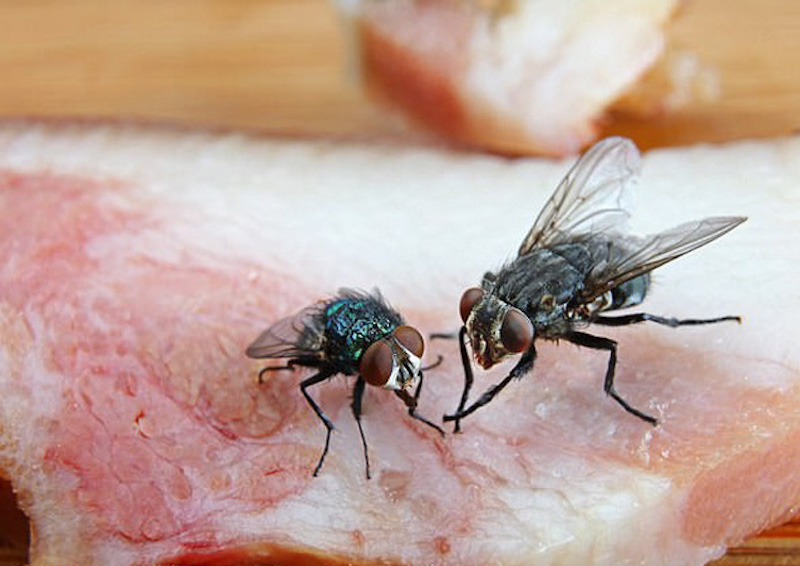
While slightly less common in the kitchen itself unless you have houseplants nearby, fungus gnats are another frequent indoor nuisance. These insects are black, have long legs, and look somewhat like miniature mosquitoes. They are entirely uninterested in human food or plumbing. Instead, they lay their eggs in the damp soil of overwatered indoor plants. The larvae feed on fungi and organic matter in the soil, and sometimes on the plant roots themselves. If the swarm seems localized around your potted herbs on the windowsill, fungus gnats are the likely suspects.
Why Are Gnats Invading Your Kitchen?
Gnats do not appear by magic, even though their sudden arrival might make it feel that way. They are drawn to your kitchen by very specific environmental factors. Understanding these triggers is essential for both immediate removal and long-term prevention.
The Allure of Moisture
All types of gnats require moisture to survive and reproduce. Your kitchen is a paradise of damp environments. Leaky faucets, residual water in the sink basin, damp sponges left on the counter, wet dish towels, and the moist interior of a garbage disposal all provide the perfect hydration stations for these tiny insects.
The Scent of Fermentation and Decay
Fruit flies have an incredibly sensitive sense of smell, specifically tuned to detect the odors of fermentation. A single overripe banana or a bruised apple emits ethanol and other volatile compounds that act as a powerful magnet for fruit flies. Even minor spills of fruit juice, a few drops of wine left in a glass, or sticky residue on a countertop can attract a swarm.
Organic Buildup in Plumbing
For drain flies, the kitchen sink is a prime breeding ground. Every time you wash dishes, tiny food particles, grease, soap scum, and oils are washed down the drain. Over time, this mixture coats the inside of the pipes, creating a nutrient-rich slime. This slime protects drain fly eggs and provides an abundant food source for the hatching larvae.
The Famous “Nana’s Trick”: The Vinegar and Soap Trap
When people refer to a simple, traditional, “zero-work” method to get rid of gnats—often passed down from grandmothers or shared virally online—they are usually talking about the classic apple cider vinegar trap. This method is incredibly effective, entirely non-toxic, uses items you already have in your pantry, and targets fruit flies specifically.
How and Why It Works
The success of this trap relies on two simple scientific principles: attraction and surface tension.
-
Attraction: Apple cider vinegar is essentially fermented apple juice. To a fruit fly, the sweet, pungent, fermented aroma is irresistible. It mimics the scent of rotting fruit perfectly, drawing the gnats toward the source.
-
Surface Tension: Water and vinegar naturally have high surface tension, meaning small, lightweight insects can actually land on the surface and walk across it without sinking. This is where dish soap comes in. Adding just a drop or two of liquid dish soap to the vinegar breaks the surface tension of the liquid. When the gnats land on the surface to drink the sweet liquid, they immediately sink and drown.
Step-by-Step Instructions for the Perfect Trap
To set up this highly effective, low-effort trap, follow these detailed steps:
-
Gather Your Supplies: You will need a small, shallow bowl or a small glass (a ramekin works perfectly), liquid apple cider vinegar, and liquid dish soap (any brand will do, but fruit-scented ones might offer an extra boost).
-
Prepare the Bait: Pour about half an inch to an inch of apple cider vinegar into the bottom of your bowl or glass.
-
Add the Secret Weapon: Add just two or three drops of liquid dish soap into the vinegar.
-
Mix Gently: Swirl the mixture very gently. You want the soap to integrate with the liquid to break the surface tension, but you want to avoid creating a thick layer of bubbles on top, as the bubbles might prevent the gnats from reaching the liquid underneath.
-
Placement is Key: Place the trap directly in the area where you notice the highest concentration of gnats. Good locations include right next to the fruit bowl, near the trash can, or next to the kitchen sink.
-
Wait and Observe: Leave the trap undisturbed overnight. Within 24 to 48 hours, you should see a significant number of gnats resting at the bottom of the bowl.
-
Refresh and Repeat: Empty the trap, rinse it out, and refill it every two to three days until the gnat population has been completely eradicated.
Eliminating Drain Flies: The Sink Solution
If the image that brought you here featured a sink full of bugs, you are dealing with drain flies. The apple cider vinegar trap will not work on these pests because they are not attracted to fermented fruit. To eliminate drain flies, you must destroy their breeding ground: the organic slime coating your pipes.
Method 1: The Boiling Water Flush
The absolute simplest, “zero-work” method for minor drain fly issues is the boiling water flush. This is an excellent first step and routine maintenance procedure.
-
Boil a large pot or kettle of water.
-
Slowly and carefully pour the boiling water directly down the affected drain.
-
Repeat this process once a day for a full week.
-
Why it works: The extreme heat helps to melt away grease and soap scum, and it kills the larvae and eggs residing in the upper layers of the drain slime.
Method 2: The Baking Soda and Vinegar Volcano
For a deeper clean that naturally scrubs the inside of your pipes without harsh chemicals, use the classic baking soda and vinegar reaction.
-
Start by pouring half a cup of plain baking soda directly down the drain.
-
Immediately follow it with one cup of standard white household vinegar.
-
The mixture will immediately begin to fizz and foam, expanding to coat the inside of the pipes.
-
Allow this chemical reaction to sit and work for at least one to two hours, or preferably overnight.
-
Finally, flush the drain completely with a large pot of boiling water.
-
Why it works: The foaming action loosens the zoogleal film and organic matter where the flies breed, while the subsequent hot water flush washes it all away, destroying their habitat.
Method 3: The Enzyme Drain Cleaner
If boiling water and baking soda are not entirely effective, you may need a biological approach. Traditional chemical drain cleaners (like bleach) only pass over the slime; they do not remove it. Enzyme-based drain cleaners are specifically designed to consume organic matter.
-
Purchase an enzyme-based drain cleaner or a biological gel drain maintainer.
-
Follow the package instructions carefully. Typically, you will pour a specific amount down the drain at night when the sink will not be used for several hours.
-
The beneficial bacteria and enzymes in the product will physically eat away the grease, food particles, and slime, completely removing the drain flies’ food source and breeding ground.
Alternative “Zero-Work” Home Remedies
While the vinegar trap and drain flushes are the gold standards, there are several other highly effective, low-effort methods to clear out a kitchen gnat infestation quickly.
The Paper Cone Fruit Trap
If you do not have apple cider vinegar, you can use the very thing the gnats are attracted to: overripe fruit.
-
Place a small piece of overripe, heavily bruised, or rotting fruit (a slice of banana or a strawberry works best) into the bottom of a tall glass or jar.
-
Roll a piece of standard paper into a cone shape, leaving a tiny opening (about the size of a pen tip) at the bottom.
-
Place the cone into the jar, ensuring the narrow tip is pointing down toward the fruit but not quite touching it. Tape the edges of the cone to the rim of the jar so there are no gaps.
-