
The Science of Venting: How Women Lower Stress Levels Together
Introduction: The Hidden Mechanism Behind Social Bonding In a fast-paced world, managing emotional pressure has become a primary focus for…
30/05/2026 13:26
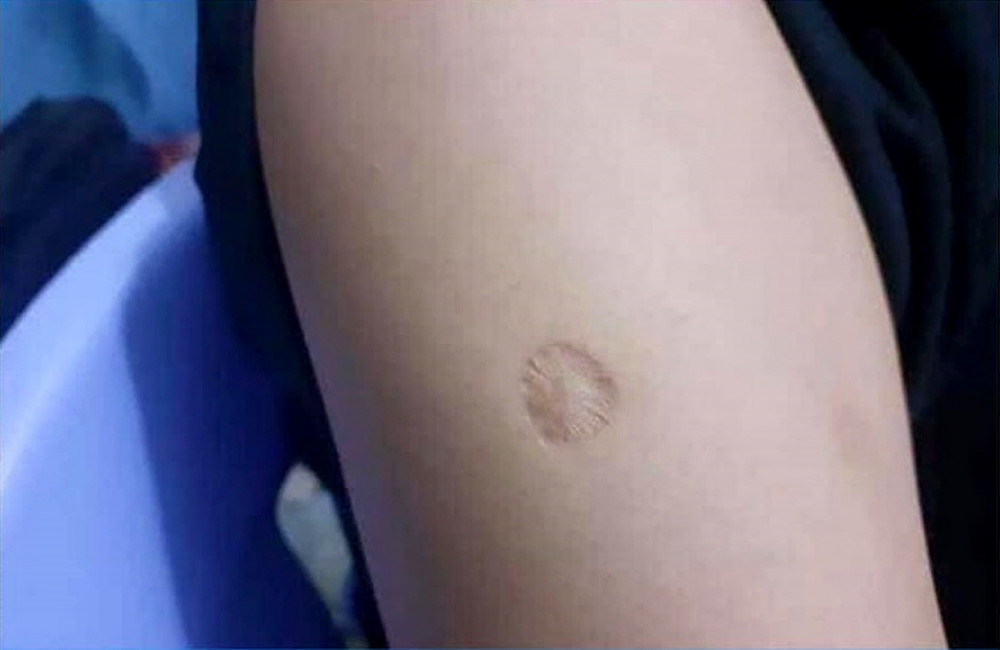
If you look at the upper arms of your parents, grandparents, or perhaps even your own, you might notice a very distinct, circular, slightly indented scar. For decades, this mark has been a silent identifier across the globe. Millions of people carry it, yet many younger individuals have no idea how it got there.
It is a literal stamp of medical history etched into human skin. This article dives deep into the fascinating story behind this universal childhood memory, the brilliant technology that created it, and why it suddenly disappeared from modern medical practices.
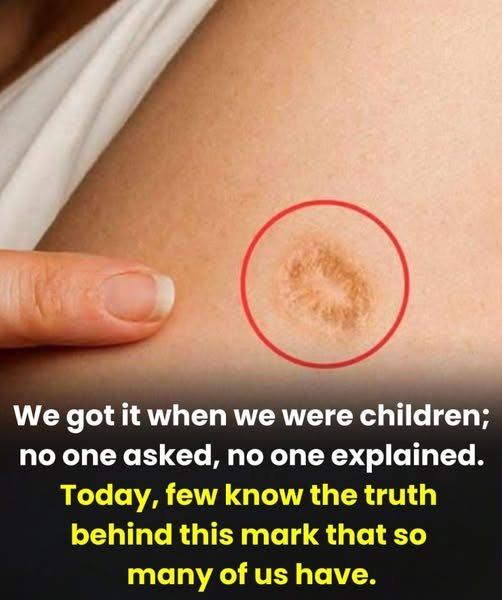
The circular, puckered scar is the permanent byproduct of the Smallpox Vaccine. Specifically, it is the result of a highly successful global immunization campaign led by the World Health Organization (WHO) during the mid-to-late 20th century.
Unlike modern injections that use a long, thin needle to deliver fluid deep into the muscle or fat, the historical method for this specific program required a completely different approach. The goal was to introduce the live virus strain just beneath the very top layer of the skin (intradermally).
To understand why the scar looks like a wheel or a small crater, we have to look at the tool used to administer it: the bifurcated needle.
Invented by medical researcher Benjamin Rubin in the 1960s, the bifurcated needle is a tiny, two-pronged steel fork. It did not hold fluid inside a syringe. Instead, the process was fascinatingly simple:
The two prongs were dipped directly into the vial of the medical solution.
Due to capillary action, a single, precise drop of the liquid would hold fast between the two prongs.
The practitioner would then hold the needle perpendicular to the patient’s arm.
Instead of a smooth puncture, the practitioner would rapidly tap or prick the skin 15 times in a matter of seconds.
This rapid pricking did not go deep enough to cause severe bleeding, but it intentionally broke the surface layer of the skin, depositing the solution exactly where the immune system could interact with it most effectively.
The scar is not actually caused by the needle itself, but rather by your body’s intense immune response to the solution. The process followed a very predictable timeline that almost everyone who grew up in that era remembers vividly.
| Stage | Timeline | What Happened to the Arm |
| Stage 1 | Days 1–3 | Minor redness and irritation at the puncture site. |
| Stage 2 | Days 4–7 | A small, raised bump appears, resembling a mosquito bite. |
| Stage 3 | Days 8–14 | The bump turns into a blister filled with fluid, which then dries out. |
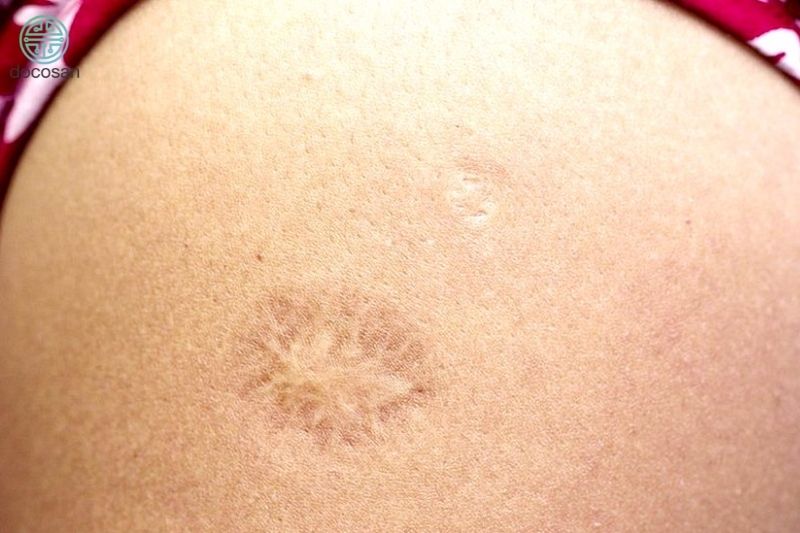
| Stage 4 | Weeks 3–4 | A thick crust or scab forms. When the scab naturally falls off, it leaves behind the classic indented, circular mark. |
This localized reaction was a crucial sign for doctors. A well-formed blister and subsequent scar meant the body had successfully recognized the agent and built a powerful defense shield. If a patient did not develop the bump or the mark, they were often re-treated because it meant the initial attempt did not “take.”
The reason younger generations (generally those born after the early 1980s) do not have this mark is due to one of the greatest achievements in human history: the total eradication of the disease.
By 1980, thanks to the aggressive global campaign using the bifurcated needle, the World Health Organization officially declared the globe entirely free from this specific threat. Because the danger no longer existed in nature, routine public programs were discontinued worldwide.
Today, the only people who still receive this specific procedure are laboratory researchers handling related materials or certain military personnel.
For those who carry it, the mark is a badge of a shared global experience. It represents a time when communities worldwide collectively participated in a massive effort to protect the future.
While many children at the time line up in school hallways without fully understanding the science behind the rapid tapping on their arms, they grew up to realize they were part of a movement that altered the course of human health forever. It is a physical archive on the human body—a story carried forward on the skin of generations.
Introduction: The Hidden Mechanism Behind Social Bonding In a fast-paced world, managing emotional pressure has become a primary focus for…
Introduction: The Universal Childhood Mark If you look at the upper arms of your parents, grandparents, or perhaps even your…

Introduction: The Complex Language of Subcutaneous Sensations Skin sensations serve as a vital communicative interface between external environments and internal…

Tired of Dealing with Unwanted Mice? Here is the Ultimate Fix Finding signs of rodents in your living space can…

Many people suddenly notice their freezer door no longer closing properly because thick layers of ice have built up inside.…

According to experts, a woman can physically live for many years without intimacy. There is no exact limit or “danger…