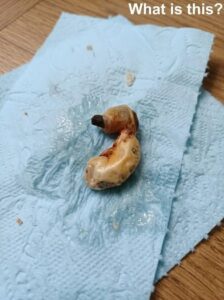
The Strange Discovery Under a Child’s Bed That Left Everyone Guessing
The internet is filled with unusual discoveries, but every once in a while, a single image captures global curiosity in…
23/05/2026 15:11
Have you ever walked through the front door after a long day only to be greeted by a furry whirlwind of excitement, culminating in a wet, enthusiastic tongue swipe across your face or hands? For most pet parents, getting licked by their four-legged best friend is a daily ritual. While we often casually refer to these moments as “puppy kisses,” the reality behind canine licking is far more nuanced, deeply rooted in evolutionary biology, social structures, and sensory exploration.
Understanding why your pet engages in this behavior isn’t just a matter of curiosity. It offers a profound window into their emotional world, their health status, and how they view their place within your shared family dynamic.
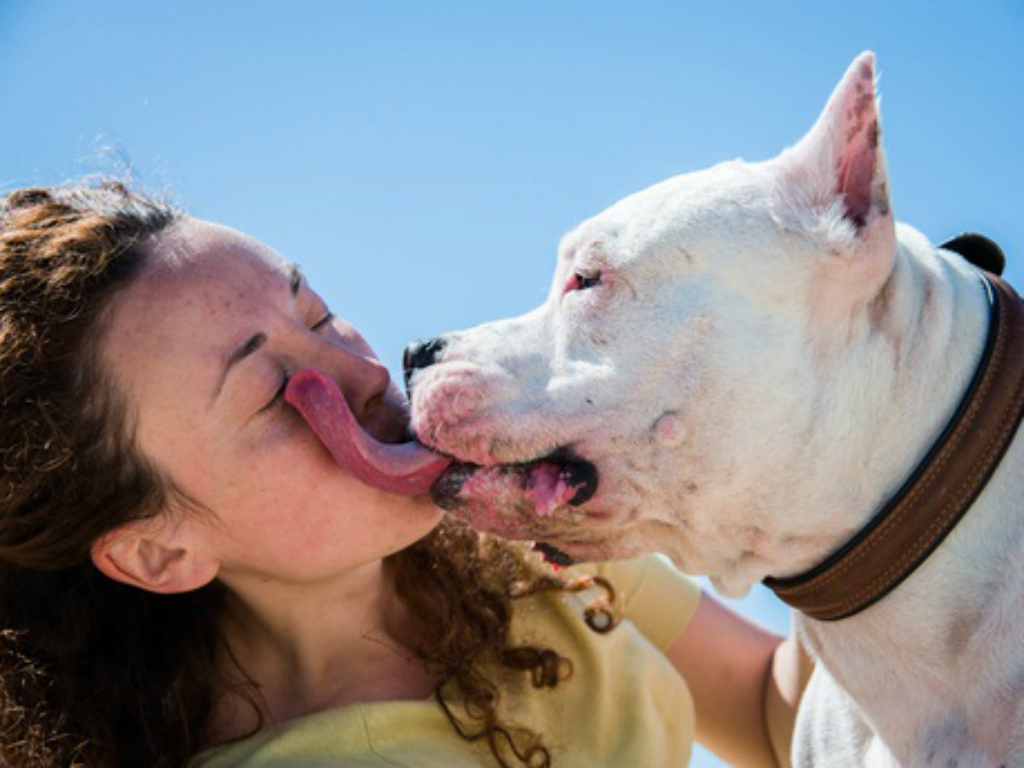
To truly understand why a modern, domesticated dog licks, we have to look back at their wild ancestors. In a wolf pack or a community of wild canines, licking is a vital tool for survival, communication, and basic biological function from the very first moments of life.
The moment a puppy is born, the mother’s tongue becomes their entire world. A mother licks her newborns for several critical reasons:
Stimulating Respiration: The vigorous sweeping motions help clear embryonic sacs and stimulate the puppy to take their very first breaths.
Encouraging Elimination: Very young puppies cannot urinate or defecate on their own. The mother’s licking stimulates these vital bodily functions.
Bonding and Comfort: The physical contact releases oxytocin (often called the “love hormone”) in both the mother and the pup, establishing an unbreakable emotional bond and lowering stress levels.
As wild puppies grow a bit older and begin transitioning from milk to solid food, their licking behavior takes on a tactical purpose. When adult pack members return from a successful hunt, the puppies will rush toward them, enthusiastically licking at the corners of the adults’ mouths.
In the wild, this specific behavioral trigger prompts the adult to regurgitate partially digested meat for the pups. While your golden retriever puppy isn’t expecting you to regurgitate your dinner, that deeply hardwired instinct to lick around human mouths when they want food, attention, or resources remains incredibly strong.
When your pet licks you, they are rarely doing it for just one single reason. Depending on the context, the timing, and their overall body language, a lick can convey a wide spectrum of messages.
+-------------------+----------------------------------------------------------+
| Type of Lick      | Primary Motivation / Meaning                            |
+-------------------+----------------------------------------------------------+
| Face/Mouth Licking| Respect, submission, requesting food or attention        |
| Hand/Arm Licking  | Affection, grooming, tasting salt/lotions on the skin   |
| Continuous/Frantic| Stress relief, anxiety management, compulsive behavior   |
| Gentle/Slow Nudges| Social bonding, checking in on your emotional state      |
+-------------------+----------------------------------------------------------+
Let’s start with the most heartwarming explanation: love. When your furry companion licks you, their brain releases endorphins and oxytocin. These neurochemicals induce a sense of calm, safety, and pleasure. For them, licking you is the ultimate way to say, “You are part of my family, and being close to you makes me feel safe and happy.” It is their version of a comforting embrace or a reassuring pat on the back.
In the complex social hierarchies of canines, licking is an essential tool for maintaining peace and showing deference. A lower-ranking member of a group will often lick a more dominant individual as a sign of respect and pacification.
When your pet licks your hands or chin, especially with lowered ears, a wagging tail, and a relaxed or slightly submissive posture, they are acknowledging you as the trusted leader of the household. It is a peaceful gesture meant to reassure you that they mean no harm and respect your authority.
Dogs are master observers of human behavior. They quickly learn what actions cause us to react. If your pet licks your hand and you immediately turn around, smile, pet them, or give them a treat, they quickly register a clear pattern: Licking equals wonderful human attention. Even if you react by saying “No” or gently pushing them away, to an attention-starved pet, negative attention is still better than being ignored. If they want to play, go for a walk, or simply crave your eyes on them, a quick swipe of the tongue is a highly reliable way to break your focus away from your smartphone or laptop screen.
While humans rely heavily on vision to navigate the world, canines rely primarily on scent and taste. They possess a specialized olfactory organ located in the roof of the mouth called the vomeronasal organ (or Jacobson’s organ).
When your pet licks your skin, they aren’t just tasting you; they are literally reading your chemical biological signature. Through a simple lick, they can gather information about:
Where you have been today.
What other animals you have interacted with.
Your current emotional state (via the hormones and pheromones excreted through your sweat).
Furthermore, human skin is naturally salty, particularly after a workout or a warm day. Many pets genuinely enjoy the savory, salty taste of human sweat. They might also be highly attracted to the scent of your body wash, hand creams, lotions, or the microscopic remnants of the lunch you handled an hour ago.
Just as humans might bite their fingernails, twirl their hair, or pace the floor when they feel overwhelmed, canines utilize repetitive physical behaviors to process complex emotions. Licking releases a soothing cascade of chemicals in a pet’s brain, turning the action into a highly effective self-soothing mechanism.
If a pet finds themselves in an environment that feels unpredictable, loud, or frightening, they may begin to lick excessively. This could manifest as licking their owner continuously, or focusing entirely on an object like a favorite blanket, a toy, or their own paws.
If you notice your pet licking with a tense body, widened eyes (where you can see the whites of their eyes), or frequent yawning, they are likely trying to calm themselves down from an external stressor like thunderstorms, fireworks, or separation anxiety.
When a highly intelligent, energetic animal is left alone for long stretches without mental puzzles, physical exercise, or toys to engage their mind, they have to find a way to burn off that pent-up mental energy. Continuous licking becomes a default activity to pass the time. It gives them something active to focus on, helping to fill the void of an under-stimulated day.
While occasional or even frequent licking is entirely normal, there is a distinct line where the behavior crosses over into a medical or psychological issue that requires targeted intervention.
   [Normal Behavior] ──► Occasional, responsive to commands, relaxed posture

   [Potential Concern] ──► Obsessive, self-damaging, difficult to interrupt
If a pet focuses their licking entirely on one specific area of their own body—most commonly their paws, lower belly, or base of the tail—it is rarely just a behavioral quirk.
Environmental and Food Allergies: Allergic reactions in pets often manifest as intensely itchy, inflamed skin, particularly on their feet. Continuous licking is an attempt to soothe that fiery irritation.
Localized Pain: If an animal has an aching joint from arthritis, a hidden splinter in their paw pad, or an internal injury, they will instinctively lick that exact spot repeatedly to comfort themselves, much like a human would rub a sore muscle.
Gastrointestinal Distress: Interestingly, sudden episodes of frantic licking of unusual surfaces (like floors, walls, or carpets) can be a clear sign of nausea, acid reflux, or an upset stomach.
In extreme cases, repetitive licking can crystallize into an obsessive-compulsive disorder. When this happens, the animal becomes completely locked into the behavior, often to the point where they cannot stop to eat, play, or sleep. They may lick their own skin so severely that they create raw, bleeding sores known as lick granulomas, which are highly susceptible to painful secondary infections.
If your pet’s licking habits have become a bit too intense, wet, or frequent for your personal comfort, you don’t have to simply accept it. Because this behavior is highly driven by instincts and rewards, it can be easily shaped using positive, compassionate training techniques.
The absolute worst way to handle unwanted licking is by yelling, scolding, or physically punishing your companion. This will only induce confusion, fear, and anxiety, which can ironically cause them to lick even more to soothe their distress.
Instead, use the principle of redirection. The moment your pet begins to lick you excessively, calmly redirect their focus to a more appropriate activity.
Ask them to perform a known command, like “Sit” or “Down.”
Provide them with a mentally engaging alternative, such as a rubber toy stuffed with healthy treats, a puzzle feeder, or a long-lasting chew.
Reward them with praise and attention only when they are focusing on the toy rather than your skin.
If your pet uses licking as a primary tool to demand your attention, the most effective response is to completely remove the reward.
When the tongue comes out, immediately freeze. Turn your face away, cross your arms, and avoid all eye contact. If they persist, quietly stand up and walk away into another room, closing the door behind you for a minute or two.
This sends a crystal-clear, non-threatening message: Licking makes the fun human completely disappear. Once they are calm and settled, you can return and lavish them with love, teaching them that quiet, calm behavior is what actually wins your affection.
An exhausted pet is a well-behaved pet. If boredom is the root cause of their behavior, increasing their daily mental and physical stimulation can work wonders.
Introduce longer, more varied walks where they are allowed ample time to sniff and explore.
Incorporate short, fun daily training sessions to challenge their brain.
Utilize lick mats spread with pet-safe peanut butter or plain Greek yogurt. This channels their natural urge to lick into a structured, highly satisfying activity that won’t leave your hands covered in saliva.
There is an old, remarkably persistent myth that a dog’s mouth is cleaner than a human’s, or that letting an animal lick a human wound can help it heal faster. This is not only medically inaccurate but can potentially be hazardous to your health.
While canine saliva does contain certain enzymes and proteins that offer mild antimicrobial properties against specific bacteria native to wild environments, their mouths are also teeming with a diverse array of unique bacteria, parasites, and pathogens.
For the vast majority of healthy adults with robust immune systems, a few joyful licks on intact skin are completely harmless. However, real complications can arise if their saliva comes into direct contact with:
Open cuts, scrapes, or fresh wounds.
The delicate mucous membranes of your eyes, nose, and mouth.
One specific bacterium commonly found in the mouths of healthy canines and felines is Capnocytophaga canimorsus. While completely benign to the animal, if this bacterium enters a human bloodstream through an open wound or deep bite, it can, in rare instances, cause severe systemic infections, sepsis, and serious illness, particularly in individuals who are immunocompromised, elderly, or missing a spleen.
To enjoy your relationship with your pet safely, keep these simple, practical health tips in mind:
┌────────────────────────────────────────────────────────┐
│               HEALTHY BOUNDARY CHECKLIST               │
├────────────────────────────────────────────────────────┤
│ 1. Avoid allowing licks directly on eyes, nose, mouth. │
│ 2. Wash skin with soap if licked over a cut or scratch.│
│ 3. Keep pets updated on routine deworming treatments.   │
│ 4. Maintain consistent brushing of your pet's teeth.  │
└────────────────────────────────────────────────────────┘
By maintaining these basic hygiene boundaries, you can comfortably accept your companion’s expressions of devotion without worrying about unnecessary health risks.
At its core, licking is an incredibly beautiful, multi-layered aspect of how canines navigate their world and interact with the humans they love most. Whether it is an evolutionary callback to their wild ancestry, a subtle show of deep respect for you as the head of the household, or simply a desire to taste the salty lotion you applied after your morning shower, it is an authentic expression of their inner world.
By taking the time to observe the context, read their body language, and understand the specific motivations driving their behavior, you can deepen your relationship with your companion.
Embrace those gentle, affectionate check-ins, provide comforting alternatives when they feel anxious, and enjoy the beautiful, unspoken bond that makes having a canine companion one of the most rewarding experiences life has to offer.
The internet is filled with unusual discoveries, but every once in a while, a single image captures global curiosity in…
The Language of Licks: Why Your Canine Companion Can’t Stop Gifting You “Kisses” Have you ever walked through the front…

The digital world has recently been flooded with a striking viral warning: “Doctors warn: Limit eating these 4 foods immediately,…

Have you ever paused to glance into the toilet bowl before flushing? It might not be the most glamorous habit,…

The Ultimate Guide to the Loquat Fruit Introduction: The Mysterious Golden Fruit Have you ever stumbled across a vibrant, golden-orange…
A parent recently shared a disturbing photo online after discovering a strange curled object hidden under her son’s bed while…