
Understanding Extreme Intestinal Expansion
The human digestive tract is an incredibly adaptive and resilient system. However, when regular elimination patterns are disrupted for prolonged…
29/05/2026 12:21
Finding a stray, coarse dark hair on your chin can feel frustrating, confusing, or even alarming. For many women, plucking out these unexpected visitors becomes a regular part of their morning routine. While it is incredibly common, many women suffer in silence, believing they are the only ones dealing with this issue.
The reality is that facial hair on women is a widespread, perfectly natural occurrence that is deeply tied to human biology. In most cases, it is a completely benign aesthetic nuisance. However, in other cases, a sudden or excessive increase in facial hair can serve as a subtle internal biological alarm system, signaling an underlying hormonal shift or an undiagnosed medical condition.
To truly understand why these hairs appear, we need to dive deep into the mechanics of human biology, the delicate balance of endocrine systems, the stages of life, and the various ways to address this issue safely and confidently.

Before looking into the specific reasons for chin hair, it helps to understand how human hair growth actually works. Every single human being, regardless of gender, is covered in millions of hair follicles. These follicles are programmed to produce different types of hair based on age, genetics, and chemical signals.
During puberty, a surge in internal chemical messengers causes many vellus hairs to transition permanently into terminal hairs. For men, this happens extensively on the face, chest, and abdomen. For women, it typically occurs in the underarms and pubic area.
However, female facial hair follicles also possess the receptors necessary to trigger this transition. If the delicate balance of internal chemical signals shifts—even slightly—the fine, invisible “peach fuzz” on a woman’s chin can transform into thick, dark terminal hair.
The most frequent culprit behind unexpected chin hair is a shift in your body’s chemical messengers. While it is common to categorize certain compounds as strictly “male” or “female,” the truth is that every human body requires a combination of both to function properly.
Women naturally produce a small amount of male-associated chemical compounds, primarily in their ovaries and adrenal glands. These compounds play vital roles in maintaining bone density, muscle mass, mood, and libido.
When your system is running smoothly, your female-associated compounds keep these male-associated compounds in check. However, if your body produces too much of the male compound, or if your female compound levels drop significantly, the hair follicles on your chin become overstimulated. This biological shift is the direct trigger that tells fine vellus hair to turn into coarse terminal hair.
If the growth of chin hair is sudden, thick, and accompanied by other physical symptoms, it may be a sign of a very common condition known as Polycystic Ovary Syndrome (PCOS). This condition affects a significant percentage of women worldwide and is a leading cause of chemical imbalances.
In a body with PCOS, the ovaries produce a higher-than-normal amount of male compounds. This imbalance can disrupt the natural menstrual cycle and cause a variety of symptoms, including:
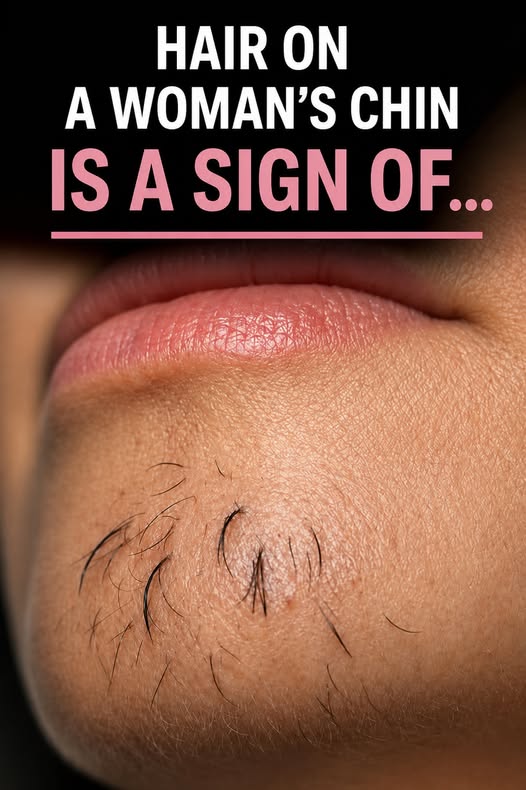
Excessive hair growth on the chin, upper lip, chest, or back.
Irregular, missed, or incredibly heavy menstrual periods.
Persistent adult skin breakouts along the jawline and chin.
Unexplained weight gain or difficulty losing weight.
Thinning hair on the scalp, resembling a male pattern.
PCOS is a metabolic and reproductive condition, not just a cosmetic one. Managing it effectively involves a combination of nutritional adjustments, lifestyle changes, and guidance from a healthcare professional.
As women mature, their bodies go through predictable, major biological transitions. One of the most significant shifts occurs during perimenopause and menopause.
Throughout a woman’s younger years, her ovaries produce abundant amounts of female-associated compounds, which comfortably dominate and mask the effects of the male compounds. However, as menopause approaches, the production of female compounds drops drastically.
Because the level of female compounds declines much faster than the level of male compounds, an relative imbalance is created. Suddenly, the remaining male compounds have a stronger influence on the body than they did before. This is precisely why many women notice coarse hairs appearing on their chin, jawline, or upper lip for the first time in their 40s or 50s. It is a completely natural part of the aging process and is not a sign of poor health.
Sometimes, the presence of chin hair has nothing to do with a medical condition or an abnormal chemical surge. Instead, it is written directly into your DNA.
The sensitivity of your hair follicles to normal levels of internal compounds is highly hereditary. If your mother, grandmother, or sisters notice facial hair, there is a very high probability that you will experience it too.
Furthermore, global demographics show that ethnic background plays a major role in natural hair patterns. Women of Mediterranean, Middle Eastern, South Asian, or Hispanic descent naturally tend to have more active terminal hair follicles, including on the face, compared to women of East Asian or Native American descent. If your chin hair is genetic, it is simply a reflection of your beautiful heritage and carries no negative health implications.
Modern life can be incredibly demanding, and chronic stress takes a heavy physical toll on the human body. When you experience prolonged periods of stress, your brain signals your adrenal glands to release a flood of survival compounds, including cortisol.
However, the adrenal glands do not just produce stress compounds; they are also responsible for generating a portion of the body’s male compounds. When your adrenal system is constantly overworked due to high stress, sleeplessness, or burnout, it can inadvertently overproduce these male compounds as well.
This unexpected surge can disrupt your systemic balance, leading to the sudden appearance of stray hairs on your chin or upper lip. Managing your daily stress levels is not just important for your mental peace—it is vital for keeping your internal chemistry stable.
Another factor to consider is the role of modern medicine. Certain prescriptions and therapeutic treatments can list increased body or facial hair as a known side effect.
+-----------------------------------+-------------------------------------------+
| Type of Medication                | Primary Impact on Body                    |
+-----------------------------------+-------------------------------------------+
| Regular Systemic Steroids         | Mimics adrenal compounds, altering growth |
+-----------------------------------+-------------------------------------------+
| Specific Mental Health Therapies  | Can subtly alter pituitary secretions     |
+-----------------------------------+-------------------------------------------+
| Topical Over-the-Counter Creams   | May cause localized hair follicle surges  |
+-----------------------------------+-------------------------------------------+
If you notice a sudden burst of hair growth shortly after starting a new therapeutic routine, it is essential to review your treatment plan. Never stop taking a prescribed medication on your own, but do schedule a conversation with your care provider to discuss potential alternatives that do not cause this distressing side effect.
As established, a few stray hairs on the chin are rarely a cause for concern. However, there are specific scenarios where your body is urging you to consult a healthcare professional, such as an endocrinologist or a gynecologist.
You should consider scheduling an evaluation if you experience any of the following:
Rapid Onset: The hair growth appears suddenly and spreads aggressively over a short period of weeks or months.
Male Patterns: You notice thick hair developing on your chest, abdomen, upper back, or inner thighs.
Voice Alterations: Your speaking voice becomes noticeably deeper or raspy.
Systemic Shifts: You experience sudden, severe cycle irregularities, extreme fatigue, or dramatic mood swings.
A physician can conduct simple blood panels to evaluate your exact compound levels and perform ultrasounds if necessary, ensuring that any root issues are addressed early and safely.
If you have ruled out any serious medical issues and simply want to manage your chin hair for personal comfort or aesthetic preferences, you have a wealth of modern options available. Every method has its unique advantages and considerations.
For a few scattered hairs, pulling them out from the root using clean tweezers or utilizing the traditional art of threading is highly effective. This method keeps the area clean for several weeks because the hair must rebuild from the root. Ensure you always sterilize your tools to prevent minor skin irritation or ingrown bumps.
Despite the persistent urban myth, shaving your facial hair will not cause it to grow back thicker, darker, or faster. Shaving simply cuts the hair at the surface of the skin. When the hair regrows, it has a blunt edge instead of a tapered tip, which can temporarily make it feel coarser to the touch. It is a quick, painless option but requires frequent maintenance.
If you are looking for a long-term reduction in hair growth, light-based professional treatments are incredibly popular. This technology targets the dark pigment inside the hair follicle, using concentrated energy to disable the root. This method works best on dark hair paired with lighter skin tones, though modern advancements have made it safer for darker skin profiles as well.
For absolute permanency, electrolysis remains the gold standard. This technique involves inserting an incredibly fine probe into each individual hair follicle and applying a tiny electrical current to destroy the growth center permanently. It is highly effective for all hair types and skin tones, including stubborn white, gray, or blonde chin hairs that light-based therapies cannot detect.
At the end of the day, finding hair on your chin is a deeply human experience that unites millions of women around the globe. It is a physical manifestation of your body’s intricate, ever-changing inner world.
Whether you choose to celebrate it, pluck it out in front of your bathroom mirror, or seek medical guidance to find internal balance, remember to treat your body with kindness and understanding. Your physical worth is never defined by the presence of a few stray hairs, and you possess all the knowledge and tools necessary to handle it with complete confidence.
The human digestive tract is an incredibly adaptive and resilient system. However, when regular elimination patterns are disrupted for prolonged…

Can you spot the real billionaire? Let’s test your intuition. The internet loves a good riddle, especially when it involves…
Finding a stray, coarse dark hair on your chin can feel frustrating, confusing, or even alarming. For many women, plucking…
That appears to be a tick — and the strange white spot likely means it’s a female tick that has…
Many people suddenly notice tiny white spots appearing on their arms or legs as they get older. At first, most…

The first time Maria Elena Santos appeared at the Riverside border crossing, nobody wrote down her name correctly. It was…