Power strips are among the most common electrical accessories found in modern homes and offices. They provide a convenient way to expand a single wall outlet into multiple receptacles, allowing you to power laptops, phone chargers, desk lamps, and audio systems simultaneously. However, despite their widespread everyday use, many people misunderstand the limitations of power strips.
Plugging high-wattage appliances or heavy electrical loads into an ordinary extension block can lead to serious electrical issues, melting components, tripped circuit breakers, and permanent equipment damage. Understanding how power strips operate—and knowing exactly which appliances require direct wall outlet power—is essential for maintaining a reliable electrical setup in your living space.
Understanding How Power Strips Work
To understand why certain items should never be connected to a power strip, it helps to examine how household electrical circuits operate.
Power Strip vs. Surge Protector
Although they often look identical, a standard power strip and a surge protector serve different purposes:
-
Standard Power Strip: Acts simply as a multi-socket expansion board. It splits the current coming from a wall outlet among several receptacles without offering built-in protection against voltage spikes.
-
Surge Protector: Contains internal components (such as metal oxide varistors) designed to absorb sudden voltage spikes, protecting sensitive electronic equipment like computers, televisions, and gaming consoles.
Neither device, however, increases the electrical capacity of the wall outlet.
Understanding Amperage and Wattage Limits
A standard residential wall outlet in many countries is rated for 15 amps (or 20 amps on dedicated circuits) at 120 volts, which translates to a maximum continuous load of roughly 1,800 watts (or 2,400 watts for 20-amp circuits).
When you connect a power strip to a wall outlet, every device plugged into that strip draws current through the single wall socket and its internal wiring. If the total combined wattage of the connected devices exceeds the power strip’s rating or the circuit’s capacity, the components will overheat.
Appliances You Should Never Plug Into a Power Strip

Certain household appliances draw continuous, high electrical currents or produce heavy surge loads upon startup. These items should always be plugged directly into a dedicated wall outlet.
1. Space Heaters and Electric Radiators
Portable space heaters are designed to convert massive amounts of electrical energy directly into thermal energy. Most standard space heaters draw between 1,200 and 1,500 watts on high settings.
When a space heater runs continuously through a light-duty power strip, the sustained high current generates intense heat along the internal copper contacts and thin wiring of the strip. Over time, this heat can soften or melt the plastic housing, degrading the connections and creating a severe electrical hazard. Space heaters must always be connected directly to a wall receptacle.
2. Microwaves and Toaster Ovens
Countertop kitchen appliances like microwaves and toaster ovens require substantial wattage to generate heat and microwaves rapidly.
-
Microwaves: Typically consume between 800 and 1,500 watts during operation.
-
Toaster Ovens: Can easily draw 1,200 to 1,800 watts when heating up.
Because these appliances operate near the upper thermal limit of a single 15-amp circuit, combining them with other devices on a single power strip creates an immediate overload risk.
3. Refrigerators and Freezers
Refrigerators and deep freezers run continuously, cycling on and off throughout the day and night. While their average running wattage may seem modest (often between 300 and 800 watts), the compressor requires a high surge current (startup wattage) to turn on.
If a refrigerator is connected to a power strip alongside other items, the sudden voltage drop during compressor startup can trip the power strip’s internal breaker or cause voltage fluctuations that damage the refrigerator motor over time. Refrigerators require a dedicated wall outlet to ensure stable, unimpeded power delivery.
4. Hair Dryers, Straighteners, and Curling Irons
Personal care heating tools generate intense heat within seconds. Hair dryers routinely consume between 1,500 and 1,800 watts, utilizing nearly the entire capacity of a standard household circuit on their own.
Using a high-wattage hair dryer through a power strip—especially in bathrooms or dressing areas where dampness may be present—can rapidly overheat the strip’s internal wiring. These appliances should always be plugged directly into a Ground Fault Circuit Interrupter (GFCI) wall outlet.
5. Air Conditioners and Portable Coolers
Window-mounted and portable air conditioners rely on powerful compressors to cool indoor air. Similar to refrigerators, air conditioning units demand high starting currents whenever the cooling cycle begins.
Running an air conditioner through an ordinary power strip can cause excessive voltage drops, leading to compressor overheating, shortened appliance lifespans, and melted power strip sockets.
6. Coffee Makers and Espresso Machines
Modern drip coffee makers, single-serve pod machines, and espresso machines feature fast-heating elements designed to boil water in seconds. These heating elements typically draw between 1,000 and 1,500 watts during the brewing process.
Because coffee makers are frequently kept in kitchens alongside other high-draw appliances, plugging them into a shared power strip increases the chance of overloading the kitchen circuit.
7. Slow Cookers and Pressure Cookers
countertop cooking units like multi-cookers, air fryers, and pressure cookers draw significant power over extended periods. A pressure cooker or air fryer can easily draw 1,300 to 1,700 watts during operation.
Plugging long-running cooking appliances into a power strip subjects the electrical connections to continuous heat buildup, increasing the likelihood of insulation degradation over time.
8. Washing Machines and Clothes Dryers
Laundry appliances are motor-driven devices with high electrical demands:
-
Washing Machines: Require significant energy to agitate heavy loads of water and clothing, creating cyclic power spikes during spin cycles.
-
Clothes Dryers: Electric dryers typically require 240-volt heavy-duty outlets, but even compact 120-volt units draw near-maximum capacity on standard circuits.
Neither washing machines nor dryers should ever be connected to standard power strips or light-duty extension cords.
9. Another Power Strip (“Daisy Chaining”)
Connecting one power strip into another—a practice commonly referred to as “daisy chaining” or “piggybacking”—is a major electrical safety violation.
When you chain multiple power strips together, you create a complex network of multi-outlet blocks that all route back through a single primary plug. This setup creates excessive electrical resistance, increases heat accumulation along the chain, and tricks users into connecting far more devices than the original wall outlet was built to handle.
10. Sump Pumps and Heavy Power Tools
Sump pumps protect basements from flooding and must operate reliably under all weather conditions. Connecting a sump pump to a power strip introduces unnecessary points of potential failure. Moisture, power surges, or an overloaded strip breaker can shut down the pump when it is needed most.
Similarly, heavy power tools like table saws, miter saws, and air compressors draw high surge currents upon startup and must always be powered directly from wall outlets or heavy-duty industrial extension cables rated for high amperage.
Summary Comparison: What Is Safe vs. Unsafe
Warning Signs Your Power Strip Is Overloaded
It is important to routinely inspect power strips and surge protectors around your home. If you notice any of the following warning signs, disconnect the power strip immediately:
-
Warm or Hot Touch: The housing of the power strip or the cord leading to the wall feels noticeably warm or hot to the touch during operation.
-
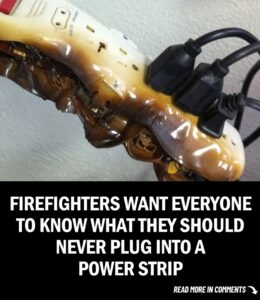
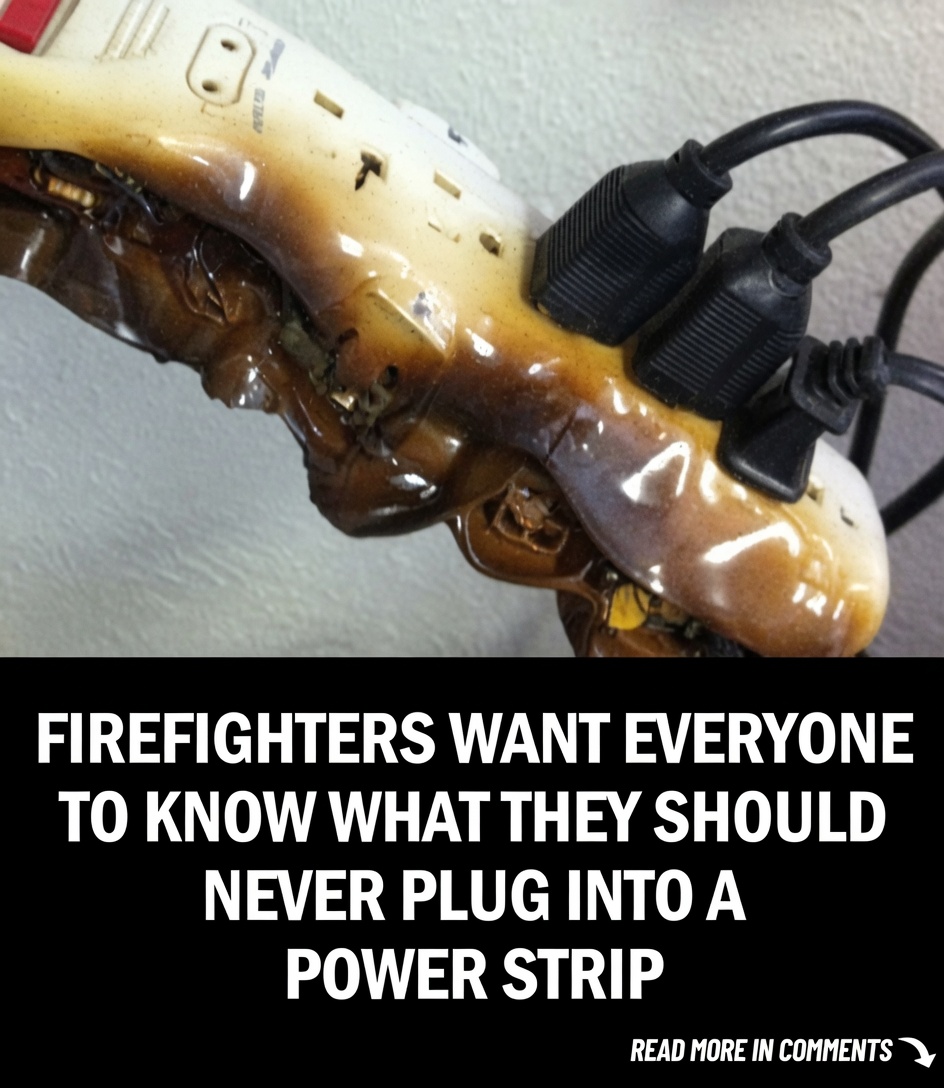
Discoloration or Scorching: Darkened, melted, or brown marks appear around the socket openings or plug blades (as shown in severe overheating scenarios).
-
Burning Smell: A plastic, fishy, or metallic odor coming from the power strip or surrounding wall outlet.
-
Frequent Tripping: The built-in breaker switch on the strip repeatedly trips or switches off on its own.
-
Flickering Devices: Connected electronics flicker, hum, or lose power intermittently when other devices turn on.
Best Practices for Safe Power Strip Usage
To maintain a secure and efficient electrical system at home or in the office, observe the following guidelines:
-
Calculate Combined Wattage: Check the label on the bottom or back of your power strip to identify its maximum wattage rating (e.g., 1,800W). Ensure the sum of all plugged-in electronics remains well below this maximum limit.
-
Plug High-Draw Appliances Direct: Always connect heating, cooling, and large motor-driven appliances directly into dedicated wall outlets.
-
Inspect Cords Regularly: Discard power strips with frayed wires, loose socket contacts, or cracked plastic casing.
-
Keep Strips Uncovered: Avoid placing power strips under carpets, rugs, or furniture cushions where heat cannot dissipate naturally.
-
Upgrade to Quality Surge Protectors: For valuable computing and entertainment equipment, invest in certified surge protectors with built-in circuit breakers and auto-shutdown capabilities.
By understanding the power requirements of your household appliances and respecting electrical capacity limits, you can protect your equipment and ensure a reliable power setup for years to come.