

What Happens To Your Body When You Eat Purslane Every Day — Especially After 60
Purslane may look like an ordinary wild plant, but in many countries it has long been valued as a nutrient-rich…
26/05/2026 16:14
The search for the origins of neurodevelopmental variations has led researchers deep into the prenatal environment. Recently, social media channels have been flooded with discussions surrounding routine prenatal imaging and its potential to predict complex conditions long before birth. A striking headline, often paired with standard prenatal imagery, claims that modern science has uncovered a definitive prenatal key to understanding neurodevelopmental differences.
But what does the actual scientific literature say? Is it possible to detect early markers of conditions like neurodevelopmental variations during a routine checkup, or is the internet once again blowing preliminary data out of proportion?
To understand the truth, we must separate sensationalized social media hooks from rigorous clinical data.
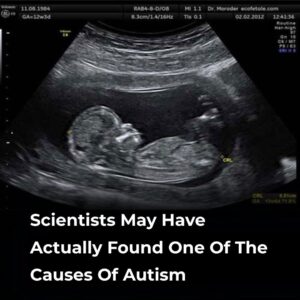
The image circulating on social media features a standard mid-trimester prenatal scan with a text overlay claiming that a core cause of neurodevelopmental variations has been found. To an untrained eye, this suggests that a single scan can diagnose or pinpoint the exact origin of a complex condition.
However, looking closely at the image data reveals that the scan itself is a standard clinical record from over a decade ago (dated around 2012) and carries a watermark from a standard maternal-fetal monitoring service. The image itself does not depict a medical breakthrough; rather, it is a stock or typical clinical image repurposed to serve as a visual anchor for a broad, generalized headline.
Medical experts caution against taking these social media graphics at face value. The development of the brain is an incredibly intricate process influenced by hundreds of factors, and no single routine scan can serve as a simple diagnostic answer.
While the viral claim is oversimplified, the underlying field of study—prenatal screening and early markers—is highly active and fascinating. Major clinical studies published in leading medical journals have investigated whether structural variations observed during early maternal checkups correlate with later developmental outcomes.
Rather than identifying a “cause,” peer-reviewed studies show that certain subtle structural variations in developing organs may appear more frequently in children who are later diagnosed with neurodevelopmental conditions. These variations are often found in:
The Renal System: Slight differences in kidney or urinary tract development.
Cardiovascular Formations: Minor structural variations in heart tissue.
Cranial Metrics: Subtle differences in head circumference or the structural distance between facial features, such as ocular spacing.
It is vital to emphasize a core rule of medicine: association does not equal causation. Seeing a minor structural variation on a scan does not mean that the variation caused a developmental difference. Instead, both the physical variation and the neurodevelopmental difference likely share a common underlying factor, such as a genetic pattern or a specific prenatal environmental condition.
Routine prenatal imaging is designed to track growth, evaluate overall fetal health, and ensure that vital organs are developing safely. It remains a crucial tool for maternal-fetal health, but it is not a tool designed for predicting behavioral or cognitive variations.
To understand why a single image cannot explain neurodevelopment, we have to look at how the human brain is built. The brain develops through an ongoing interaction between genetic blueprints and environmental influences.
Because these factors are deeply intertwined, scientific consensus emphasizes that there is no singular “trigger” for conditions like neurodevelopmental variations. Instead, it is a beautiful, complex mosaic of human biology.
While social media images lean into sensationalism, real clinical efforts are focused on safe, evidence-based early identification. Recognizing early indicators allows families to access supportive resources and early intervention programs, which can dramatically improve quality of life and functional independence.
True early identification does not rely on a single prenatal image. Instead, it involves a multi-layered approach:
Pediatric Milestones: Tracking early developmental stages, such as social smiling, babbling, and responsiveness, during infant wellness visits.
Behavioral Screenings: Utilizing validated questionnaires and observational assessments during toddlerhood.
Comprehensive Family History: Evaluating genetic patterns and health histories to understand individual developmental trajectories.
The viral spread of medical claims highlights a growing challenge: how to consume health information online safely. Sensationalized headlines are designed to spark emotional reactions, leading to shares, saves, and comments.
When encountering health claims on platforms like Facebook or Instagram, keep these three guidelines in mind:
Check the Source: Look for references to peer-reviewed medical journals or statements from reputable public health organizations rather than relying on text written directly on an image.
Consult Professionals: If a piece of information causes anxiety or curiosity regarding your own health or family planning, discuss it directly with a primary care provider or an obstetrician.
Look Past the Hook: Understand that complex biological processes cannot be explained in a single sentence or a single image overlay. Real science takes time, nuance, and extensive context.
The viral image claiming that scientists have found a definitive prenatal cause for neurodevelopmental differences blends an oversimplified hook with genuine, ongoing scientific curiosity. While researchers continue to discover fascinating links between early fetal development and long-term neurodevelopmental outcomes, there is no single test, scan, or cause that defines these conditions.
As clinical research advances, the goal remains clear: to better understand the vast spectrum of human development so that every individual can receive the proper support, understanding, and care right from the very start of life.
Purslane may look like an ordinary wild plant, but in many countries it has long been valued as a nutrient-rich…

Seniors Behind the Wheel: Navigating Modern Road Regulations Introduction: The Evolving Landscape of Senior Transportation Mobility is one of the…

The Breaking Point: When Love Means Letting Go The morning sun cast long shadows across the suburban landscape of Millfield…

Every modern vehicle is packed with subtle design features engineered to make daily commuting seamless. While many components like steering…
The search for the origins of neurodevelopmental variations has led researchers deep into the prenatal environment. Recently, social media channels…
The Hidden Dashboard Icon Most People Misuse Every single day, millions of individuals step into their vehicles, turn the key…