Baking Soda on the Face: Benefits, Risks, and Scientific Realities
The modern world of skincare is saturated with complex formulations, multi-step routines, and high-tech tools. Yet, a persistent subculture of home beauty hacks continues to thrive across digital platforms. Among the most prevalent DIY ingredients circulating in home beauty tutorials is sodium bicarbonate, universally known as baking soda. Proponents frequently advertise it as a universal remedy for an array of dermatological issues, ranging from persistent hyperpigmentation and uneven texture to fine lines and deep wrinkles. However, while this versatile crystalline compound performs exceptionally well in baking and household cleaning, applying it directly to delicate facial tissue remains a highly controversial topic within clinical dermatology.
To fully comprehend why baking soda generates such polarized opinions, it is essential to look past online testimonials and analyze the fundamental science governing the skin barrier. The human integumentary system operates under strict physiological parameters, and disrupting these conditions can yield unexpected and often severe consequences. This comprehensive evaluation explores the chemical composition of sodium bicarbonate, its physiological interactions with the dermal structure, the theoretical benefits highlighted by advocates, the verified clinical risks, and the scientifically validated alternatives that offer superior results without compromising the integrity of your appearance.

The Chemistry and Physical Structure of Baking Soda
On a physical level, baking soda presents as a fine, crystalline powder. Although it feels relatively smooth to the touch between your fingers, microscopic examination reveals sharp, irregular geometric crystals with jagged edges. This unique combination of high chemical alkalinity and mechanical abrasiveness defines its behavior when it comes into contact with organic surfaces.
The Dermal Barrier and the Critical Role of pH
To evaluate the impact of baking soda on the face, one must first analyze the concept of the acid mantle. The surface of healthy human skin is covered by a delicate, microscopic film composed of sebum, sweat, and metabolic byproducts. This layer is known as the acid mantle. The optimal pH value of facial skin typically ranges between $4.5$ and $5.5$, rendering it distinctly acidic. This naturally low pH serves several critical physiological evolutionary purposes:
-
Antimicrobial Shielding: The acidic environment prevents the proliferation of harmful pathogenic microorganisms, keeping the natural flora balanced.
-
Structural Integrity: Essential enzymatic processes responsible for synthesizing crucial lipids—such as ceramides, cholesterol, and free fatty acids—rely strictly on an acidic environment.
-
Desquamation Regulation: The natural shedding of dead cells requires specific enzymes that only activate within the skin’s native acidic range.
In stark contrast, a standard solution of baking soda on the face exhibits a pH level of approximately $9.0$ to $9.5$. This is a massive deviation from the physiological norm. Because the pH scale is logarithmic, each whole unit change represents a tenfold increase or decrease in acidity or alkalinity. Consequently, a solution with a pH of $9.0$ is roughly 10,000 times more alkaline than healthy skin. Introducing such an intense alkaline agent directly to the face can cause immediate biochemical disruption, destabilizing the fragile equilibrium of the epidermal layers.
Deconstructing the Supposed Benefits of Baking Soda
:max_bytes(150000):strip_icc()/GettyImages-2184210987-a8c305a523a84f24beff3c43c57b7d7e.jpg)
Despite the stark chemical contrast, millions of people continue to search for methods to utilize baking soda in their daily personal care routines. Understanding the mechanisms behind its superficial, temporary effects helps explain why these home remedies retain such widespread popularity.
Physical Exfoliation and Texture Refinement
The primary reason users report an immediate improvement after applying a baking soda paste is its mechanical action. The crystalline structure acts as a physical scrub, manually detaching accumulated dead cells from the stratum corneum. For individuals suffering from a buildup of rough, dry patches, this intense abrasion can temporarily reveal a smoother, softer surface layer. However, this immediate smoothness is often mistaken for a long-term improvement in health, hiding the underlying structural micro-damage caused by the process.
Brightening and Addressing Hyper-pigmentation
The claim that baking soda can minimize dark spots and even out tone stems largely from this aggressive exfoliative action. Hyperpigmentation resides within the upper layers of the epidermis. By rapidly stripping away these top layers, the dark spots may appear slightly lighter to the naked eye. Additionally, the slight irritation and increased blood flow caused by scrubbing creates a temporary flush, which users often misinterpret as a healthy, radiant glow.
Deep Pore Cleansing and Excess Oil Control
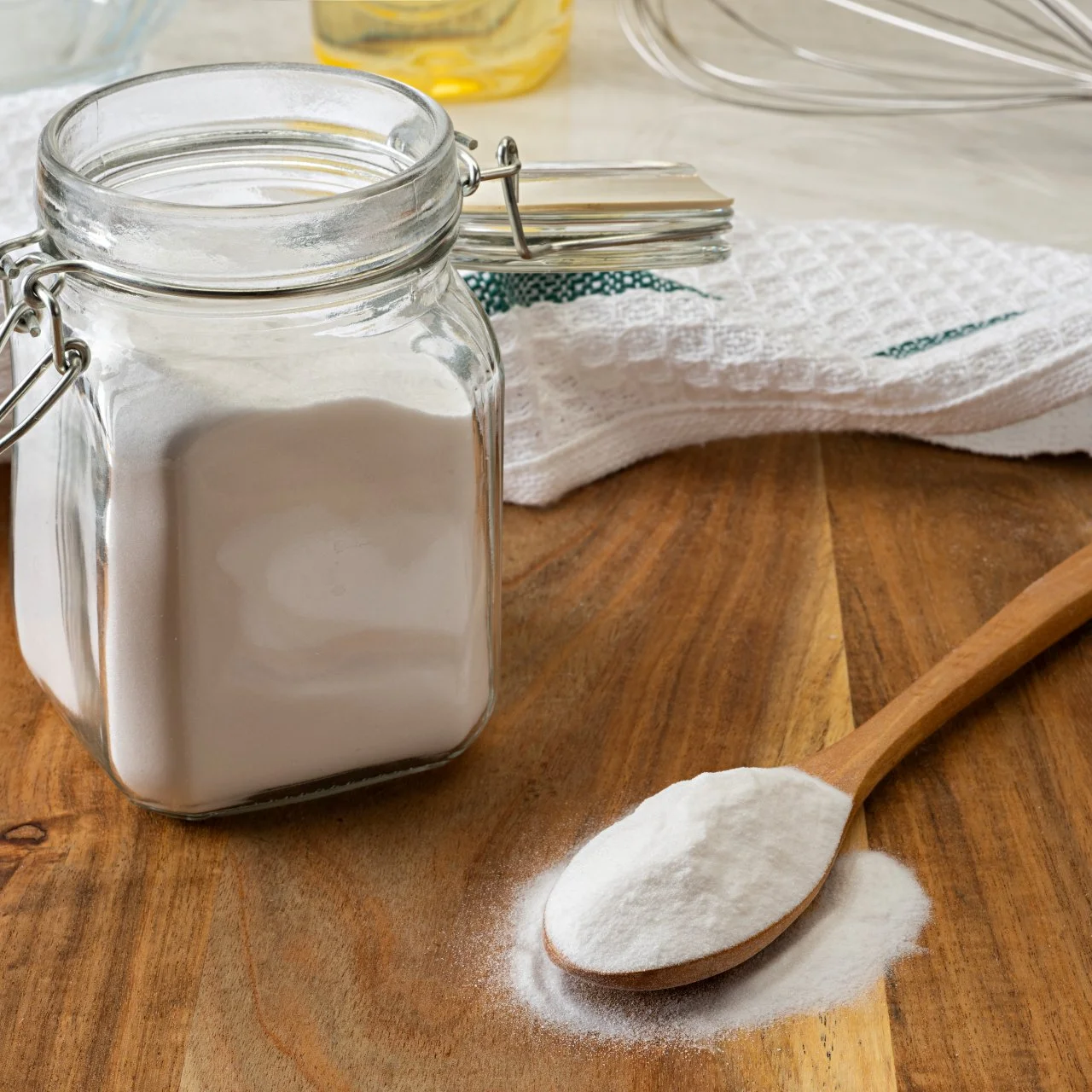
Sodium bicarbonate possesses natural oil-absorbing properties. When applied to an oily t-zone, the alkaline powder reacts with excess lipids, saponifying surface oils and leaving the skin feeling completely matte and tight. For individuals frustrated by a greasy appearance, this dynamic reduction in surface oil feels highly effective, creating the illusion of deeply cleansed, tightened pores.
(Note: The characteristic squeaky-clean, tight feeling experienced after applying alkaline compounds is not a sign of purity. Rather, it indicates that the structural lipids holding your epidermal cells together have been stripped away, causing rapid dehydration.)
The Critical Risks of Using Baking Soda on the Face
While the immediate, superficial effects can seem appealing, the physiological costs of consistently applying a highly alkaline substance to the face are significant. Dermatologists regularly warn against this practice due to several well-documented adverse reactions.
Severe Moisture Depletion and Transepidermal Water Loss
The alkaline pH of sodium bicarbonate breaks down the essential fatty acids and lipids that form the protective moisture barrier. When these structural elements are washed away, the skin loses its ability to retain moisture. This results in an immediate spike in Transepidermal Water Loss (TEWL). Over time, the lower layers become profoundly dehydrated, leading to chronic dryness, flaking, and a rough texture that completely defeats the original purpose of the treatment.
Accelerated Visible Aging and Surface Dryness
One of the most ironic outcomes of using baking soda to mitigate fine lines is that it often accelerates the visible signs of aging. Optimal hydration is absolutely vital for maintaining a plump, smooth appearance. When the protective barrier is damaged and chronic dehydration sets in, fine lines and subtle surface creases become significantly more pronounced. Furthermore, prolonged exposure to high pH levels can impair the natural regeneration of structural proteins, making the skin look duller and older than it actually is.
Micro-tears and Intense Physical Irritation
As noted previously, microscopic inspection reveals that baking soda crystals possess sharp, irregular edges. Rubbing these harsh particles across delicate facial tissues causes thousands of tiny, microscopic tears. While these micro-lesions might not be visible to the naked eye, they weaken the surface structure, provoke localized inflammation, and create direct entry points for environmental pollutants and irritants.
Disruption of the Microbiome and Redness
By neutralizing the natural acid mantle, baking soda alters the delicate balance of the dermal microbiome. Beneficial bacteria that thrive in acidic environments are suppressed, allowing opportunistic, harmful microorganisms to multiply unchecked. This imbalance frequently manifests as persistent irritation, unpredictable breakouts, widespread redness, and a significant increase in overall sensitivity.
(Warning: Individuals with pre-existing conditions such as eczema, rosacea, or naturally dry skin should never allow baking soda to touch their face. The risk of triggering an intense, painful inflammatory flare-up is exceptionally high.)
A Safer Framework for Application
For those who remain determined to experiment with baking soda despite the dermatological warnings, minimizing the potential for harm requires strict adherence to specific precautionary protocols. It should never be used as a careless, everyday wash.
The Mandatory Patch Test Procedure
Before allowing any home mixture to touch your face, executing a rigorous patch test is absolutely essential. Prepare a mild solution and apply a small dime-sized amount to a discreet, controlled area, such as the inner forearm or just beneath the jawline. Leave the mixture on for a brief period, rinse it away completely with lukewarm water, and observe the area closely for 24 to 48 hours. If you experience any signs of redness, itching, burning, or unusual dryness, discard the mixture immediately.
Minimizing Contact Duration and Mechanical Friction
If your patch test shows no negative reactions and you choose to proceed, you must limit both physical friction and exposure time. Do not scrub the mixture into your face with heavy pressure. Instead, apply it with an incredibly light, feather-soft touch. Never allow the formulation to remain on your skin for more than one to two minutes, and ensure you rinse it away thoroughly with plenty of fresh water to prevent any alkaline residue from lingering.
Essential Post-Application Restoration
Because baking soda inevitably strips away natural oils, your immediate priority post-rinse must be barrier restoration and pH rebalancing. Apply a dedicated, low-pH toner to help gently restore the acid mantle, followed immediately by a rich, fragrance-free moisturizer packed with replenishing ceramides, hyaluronic acid, and fatty acids to lock in hydration and rebuild the protective barrier.
Dermatologist-Approved, Scientifically Verified Alternatives
Modern cosmetic science has developed countless sophisticated, highly effective ingredients that target dark spots, wrinkles, and texture issues without causing the severe damage associated with baking soda. Shifting your focus to these verified options will deliver far better, safer results.
Advanced Exfoliation via Alpha and Beta Hydroxy Acids
Rather than relying on harsh physical scrubbing, modern skincare utilizes chemical exfoliants like Alpha Hydroxy Acids (AHAs) and Beta Hydroxy Acids (BHAs) to clear away dead skin cells safely:
-
Glycolic and Lactic Acids (AHAs): These water-soluble acids gently dissolve the microscopic bonds holding dead cells together, encouraging uniform shedding, evening out tone, and promoting a radiant appearance without scratching the surface.
-
Salicylic Acid (BHAs): Being oil-soluble, salicylic acid can penetrate deep into pores to dissolve trapped sebum and debris, making it incredibly effective for clearing congestion and minimizing the appearance of pores.
Targeting Dark Spots and Tone Discoloration
To safely resolve hyperpigmentation and uneven patches, look for proven brightening agents that regulate melanin production without altering your skin’s natural pH:
-
Vitamin C (Ascorbic Acid): A potent antioxidant that actively neutralizes free radicals, brightens dark patches, and supports natural collagen synthesis for an improved appearance.
-
Niacinamide (Vitamin B3): A versatile, well-tolerated ingredient that reduces visible discoloration, calms irritation, and strengthens the natural lipid barrier.
-
Azelaic Acid: Gently targets hyperactive melanocytes to fade post-breakout marks and smooth out uneven tone safely.
Addressing Fine Lines and Texture Changes
When it comes to softening fine lines and maintaining a youthful look, physical scrubs are ineffective. Instead, rely on ingredients that stimulate cellular turnover and provide deep hydration:
-
Retinoids and Retinol: Vitamin A derivatives remain the gold standard for reducing the appearance of wrinkles, optimizing cellular turnover, and refining overall texture over time.
-
Hyaluronic Acid and Glycerin: Powerful humectants that draw moisture deep into the epidermal layers, plumping up the skin and instantly smoothing out fine surface lines caused by dehydration.
Comparative Analysis: Baking Soda vs. Professional Formulations
To clearly see the difference between these approaches, consider this direct comparison of their primary characteristics:
| Feature |
Baking Soda Solutions |
Professional Skincare Products |
| pH Level |
Highly Alkaline ($9.0$ – $9.5$) |
Balanced / Physiological ($4.5$ – $5.5$) |
| Exfoliation Method |
Aggressive, sharp physical particles |
Controlled chemical or round physical beads |
| Barrier Impact |
Strips protective lipids; causes high TEWL |
Preserves or strengthens the lipid barrier |
| Long-Term Safety |
High risk of dryness, redness, and aging |
Clinically tested for prolonged, safe use |
Conclusion: Prioritizing Long-Term Health Over Quick Fixes
The temptation of affordable, immediate results from household ingredients is completely understandable, especially when amplified by viral online videos. However, using baking soda on the face represents a fundamentally flawed approach to skincare that ignores basic dermal biology. The temporary smoothness or brief reduction in oiliness is almost always followed by barrier disruption, chronic dehydration, increased redness, and accelerated surface wrinkling.
Your face is a delicate, highly responsive organ that thrives when treated with balance, respect, and scientifically sound formulations. Rather than risking your appearance with harsh, high-pH chemicals designed for baking or industrial cleaning, invest in modern, balanced ingredients. By switching to gentle chemical acids, targeted brighteners, and deeply hydrating moisturizers, you can achieve a truly radiant, smooth, and youthful look safely and effectively, preserving your skin’s health for years to come.