Why Are Glass Bottles Hung on Fences? The Clever DIY Security Trick
Discover the ingenious low-tech reason glass bottles are hung on fences.
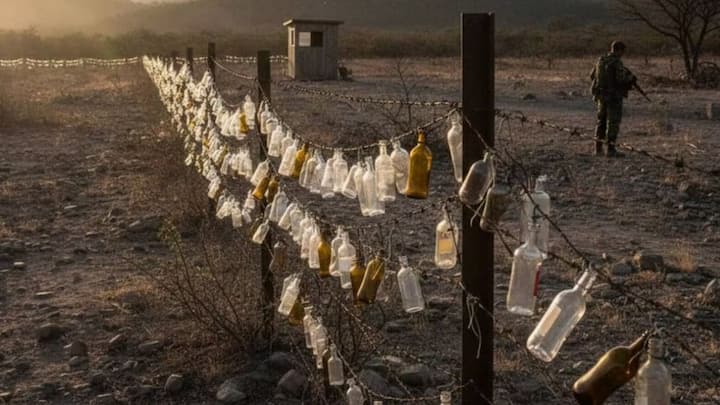
When traveling through rural farmlands, remote properties, or perimeter borders, you might spot an unusual sight along long wire fences: empty glass bottles suspended in pairs or clusters. While it may look like casual littering or an odd decorative choice, this practice is actually an ingenious, low-tech security alarm system that has been used for generations to detect unexpected movement and perimeter breaches.
The main reason empty glass bottles are hung on border wires is to act as an acoustic early warning alert system. When an animal or intruder touches, cuts, or attempts to climb over the wire fence, the vibration travels down the taut line. This movement causes the suspended glass bottles to knock against each other or strike metal posts, producing a loud, distinct clinking noise that alerts guards or property owners immediately—even in total darkness or heavy fog.

How the DIY Bottle Alarm System Works
The physics behind this simple security method relies on vibration transfer and sound resonance. Wire fences are kept under high tension, making them ideal conductors for mechanical movement across long distances.
- Vibration Propagation: Any physical contact with the fence—whether someone stepping on a wire or shaking a post—sends kinetic energy rippling through the entire length of the wire.
- Acoustic Amplification: The hanging glass bottles act as clackers. Because glass is dense and resonant, two bottles clinking together produce a sharp, high-pitched ringing sound that carries far across open fields.
- Wind vs. Intrusion: When suspended properly in pairs close together, gentle breezes cause minimal sway. However, a sudden jerk or heavy pressure on the wire creates a violent clatter that clearly distinguishes an intruder from a light gust of wind.
Key Advantages of Low-Tech Fence Alarms
Modern security systems rely on infrared sensors, motion detectors, and closed-circuit cameras. However, in remote locations or harsh outdoors, simple physical mechanisms offer distinct advantages that high-tech gear cannot always match.
1. Zero Electricity or Battery Requirements
High-tech perimeter sensors require constant power sources, wiring, or battery replacements. In expansive rural countryside, desert borders, or agricultural fields stretching across miles, maintaining power lines is impractical. Glass bottle alerts operate indefinitely without requiring a single watt of power.
2. Total Weather Resistance and Durability
Electronic motion sensors can malfunction in extreme heat, heavy rain, dust storms, or freezing temperatures. Glass bottles and sturdy tie-wires withstand harsh outdoor elements for years without corroding, short-circuiting, or deteriorating.
3. High Cost Efficiency and Reusability
Building an electronic surveillance network over long land stretches requires significant financial investment. Using recycled glass bottles and scrap wire provides an effective early-warning barrier at virtually zero cost, making it accessible for farmers, ranchers, and remote outposts worldwide.
4. Effective Nighttime Deterrence
In remote areas without artificial lighting, visibility drops to near zero at night. While a guard or landowner cannot monitor miles of dark fence visually, the sharp sound of clinking glass cuts through the night air, providing instant directional awareness of potential trespassers.
Additional Uses for Glass Bottles on Outdoor Fences
While physical security and intrusion detection are the primary reasons for hanging bottles on perimeter wires, local communities and farmers also utilize this technique for several secondary practical reasons.
Wildlife Deterrence and Pest Control
Large livestock, wild animals, or stray cattle often push against wire fences, causing structural damage over time. The sudden noise of rattling glass when an animal bumps into the wire startles them away, teaching them to keep a safe distance without causing physical harm to the animals.
Visual Boundary Markers for Herders and Vehicles
In low-visibility environments such as desert dust storms, dense morning fog, or heavy snowfalls, thin wire fencing becomes practically invisible to approaching drivers, horseback riders, or livestock herders. Brightly reflecting glass bottles catch sunlight or vehicle headlights, signaling the exact position of the fence line to prevent accidental collisions.
Traditional Wind-Driven Whistles
When bottles are hung at specific angles with open tops exposed to prevailing winds, air passing over the open bottle mouths creates a low-frequency hum or whistling sound. This constant acoustic presence helps deter nocturnal nocturnal crop-damaging wildlife from entering farmed land.
Modern Safety Applications and Lessons
The concept of using tactile vibrations to trigger simple acoustic alerts remains popular in modern DIY home security and campsite protection. Hikers and campers frequently string small bells, empty cans, or light metal objects along perimeter guy-lines around their campsites at night to alert them if wild animals approach their tents.
Understanding these time-tested survival and security hacks highlights how resourcefulness and simple physical principles can solve complex safety challenges efficiently without relying on expensive technology.
Final Thoughts
The sight of empty glass bottles hanging on border wires is a fascinating example of practical human ingenuity. By transforming everyday discarded items into a reliable, sound-based security network, land owners and perimeter guards created a zero-cost, weatherproof early warning system that stands the test of time.