The Real Science Behind Cremation: Fact vs. Myth
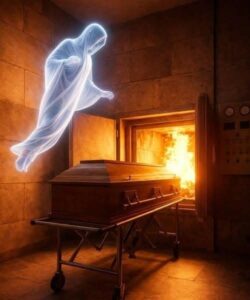
The topic of what happens during the cremation process frequently sparks curiosity, fascination, and a fair amount of internet mystery. Social media platforms love to share dramatic stories and AI-generated images of “ghostly figures” or spooky phenomena. However, the reality of the process is grounded in pure science, biology, and profound respect.
Let us separate online fiction from scientific fact by exploring exactly how the process works, debunking common myths, and understanding the physical transformations that occur.
What Actually Happens During Cremation?

To understand why certain myths exist, it helps to understand the actual step-by-step scientific process. Cremation is not the instant reduction of a body to ash by open flame; it is a highly controlled, high-temperature thermal process.
1. High-Temperature Transformation
The process takes place inside a specially designed chamber known as a retort. Temperatures inside the chamber typically range between 760°C to 980°C (1,400°F to 1,800°F). This intense heat is necessary to efficiently reduce the organic matter.
2. Evaporation and Oxidation
When the process begins, the heat first evaporates all moisture from the chamber. Next, the organic materials and soft tissues are oxidized and converted into gases, which are safely released through the filtration and exhaust systems of the facility.
3. The Remaining Elements
Contrary to popular belief, the flame does not turn everything into soft, powdery gray dust. What remains at the end of the thermal cycle are bone fragments.
4. Processing the Remains
Once the chamber has cooled, these bone fragments are carefully collected. Any metallic elements (such as surgical pins, joints, or dental fillings) are separated using magnets and manual inspection. The remaining bone fragments are then placed into a specialized machine called a processor, which reduces them to the uniform, sand-like texture we traditionally call “ashes.”
Debunking the Biggest Online Myths
Sensationalized social media posts often use deliberate misspellings to bypass platform filters while spreading urban legends. Let’s look at the science behind the most common claims.
| Myth |
Scientific Reality |
| The body “screams” or makes conscious sounds. |
False. Without air passing through working vocal cords, vocalization is biologically impossible. |
| The body sits up during the process. |
Misunderstood. While microscopic muscle contractions (the “pugilistic stance”) can occur due to heat dehydrating muscle fibers, modern equipment and secure placement prevent dramatic movement. |
| Something supernatural leaves the chamber. |
False. The only things leaving the chamber are harmless thermal gases and purified air currents. |
The “Pugilistic Stance” Explained
The myth that bodies move dramatically during the process comes from a real forensic phenomenon known as the pugilistic stance.
When muscle tissue is exposed to extreme heat, the proteins denature and dehydrate rapidly. Because flexor muscles (the ones that pull your limbs inward) are generally stronger and thicker than extensor muscles, they contract more tightly as they dry out. This can cause the elbows and knees to bend slightly.
Note: In a modern professional setting, this natural chemical reaction is entirely contained, subtle, and completely invisible to anyone outside the secure equipment. It is a purely mechanical reaction of muscle fibers, completely devoid of life or intent.
Why Do These Myths Persist Online?
It is completely natural to feel curious or uneasy about what we cannot see. The internet thrives on this exact curiosity.
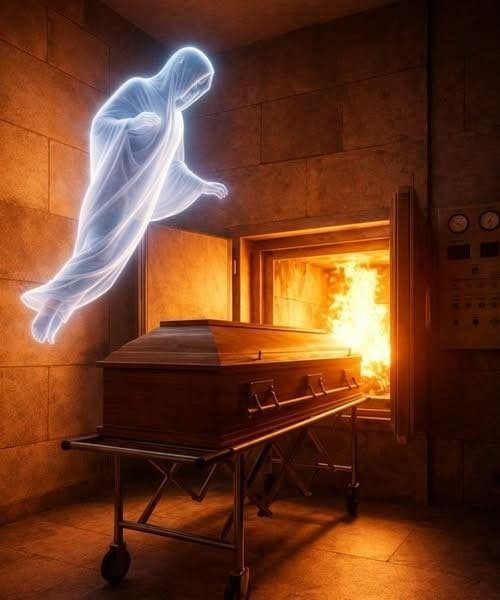
Content creators frequently use dramatic, AI-generated visuals—like the glowing spirit figure shown in viral screenshots—to capture attention, gain clicks, and trigger emotional responses.
When we look past the spooky graphics and sensational headlines, we find a process that is clean, highly regulated, and deeply rooted in the laws of chemistry and thermodynamics. Understanding the science allows us to replace fear with knowledge, viewing the process as a peaceful, natural return to elemental forms.