The Science of Canine Intuition: How Canines Read and Evaluate Human Intentions
For millennia, humans and domestic canines have shared an unparalleled evolutionary bond. Beyond simple companionship, dog owners frequently report an extraordinary phenomenon: their pets seem to possess an innate ability to judge human character. When a stranger approaches, a dog might welcome them with an enthusiastic tail wag or, conversely, retreat with a growl or a watchful gaze. This behavior prompts a fascinating inquiry into animal behavior, neurobiology, and evolutionary psychology. How do these animals distinguish between those with gentle motives and those who carry tension or hidden negative energy?
The Olfactory Superpower: Detecting Emotional Chemistry
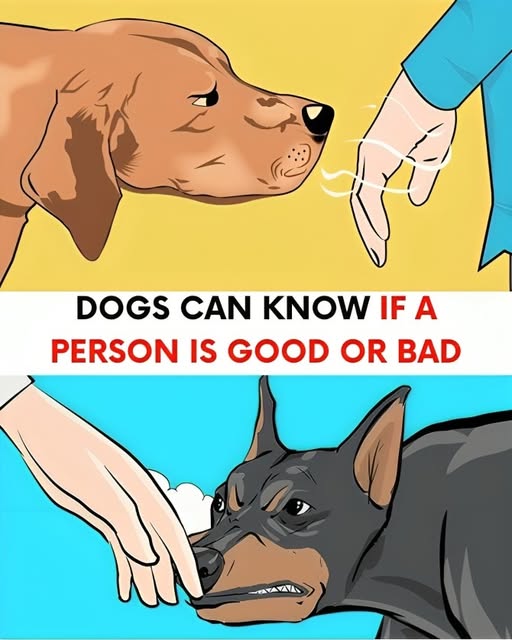
The primary mechanism behind a canine’s evaluative ability is their extraordinary sense of smell. While humans possess roughly six million olfactory receptors, a canine companion boasts up to three hundred million, depending on the breed. Furthermore, the portion of a canine’s brain dedicated to analyzing odors is forty times larger than ours. This biological setup allows them to detect chemical shifts that are completely invisible to human senses.
When an individual experiences specific emotional states—such as anxiety, stress, anger, or concealed malice—their endocrine system automatically releases specific hormones and chemical compounds into the bloodstream. These substances, including cortisol and adrenaline, alter human scent markers via sweat and respiration. Canines can easily perceive these micro-chemical alterations. A person harboring ill intent or feeling intense internal irritation will radiate a specific hormonal profile that alerts the animal to potential instability, prompting a cautious or defensive response.
Mastering Human Body Language and Behavioral Patterns
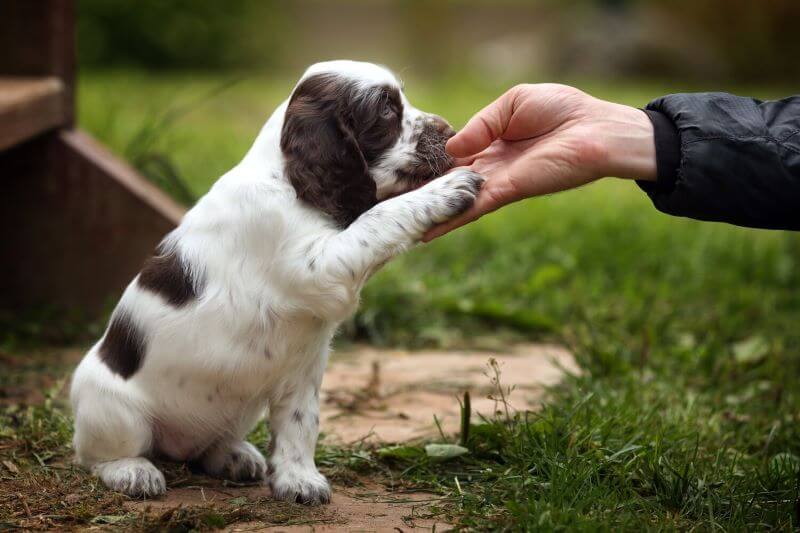
Canines are exceptional visual observers. Throughout thousands of years of domestication, they have become highly attuned to human physical movements, posture, and subtle facial expressions. They observe and interpret signals that humans often overlook during daily interactions.
-
Ocular Tracking and Gaze: Canines monitor human eyes carefully. A direct, prolonged, and rigid stare is often interpreted as a sign of challenge or dominance in the animal kingdom. Friendly individuals usually maintain soft, intermittent eye contact.
-
Postural Stance: A body that is stiff, tense, or leaning forward aggressively sends an immediate signal of discomfort to a dog. Smooth, relaxed, and open movements indicate safety and warmth.
-
Micro-Expressions: Research indicates that domestic canines can differentiate between happy, neutral, and angry human faces. Tightened jaw muscles, furrowed brows, and restricted physical movements are all cataloged by the animal as signs of a volatile emotional state.
Social Evaluation and the Power of Memory
Scientific studies conducted by animal behaviorists have demonstrated that canines possess a structured level of social intelligence. They observe how humans interact with one another and adjust their trust levels based on those observations. In controlled experiments, dogs witnessed individuals refusing to help their owners open a container. When those unhelpful individuals later offered treats to the dogs, the animals consistently rejected the food, showing a clear preference for people who cooperated with their owners.
This reveals that canine evaluation is not purely mechanical; it incorporates social memory. If a person displays rude, unhelpful, or aggressive behavior toward a dog’s human family, the animal remembers that interaction and marks that individual as a threat to the stability of the pack. This protective instinct highlights their deep loyalty and communal awareness.

Territorial Awareness and Natural Protection Instincts
Sometimes, a dog’s reaction to a visitor is less about the visitor’s moral character and more about natural territorial behavior. Canines are naturally inclined to defend their home environment and their human pack. A visitor who approaches a home with unusual, stealthy, or overly assertive steps can trigger a dog’s defense mechanisms. The resulting bark or alert posture is a calculated response designed to warn the household of an anomaly in the immediate surroundings.
By understanding that canine perception relies on a mix of chemical analysis, body language reading, and social observation, owners can better appreciate the complex intelligence of their pets. Rather than magic, this unique skill is a highly refined survival mechanism that continues to strengthen the ancient bond between humans and canines.