The Truth Behind Eyelash Parasites: AI vs Reality
Separating Viral Fiction from Ocular Science
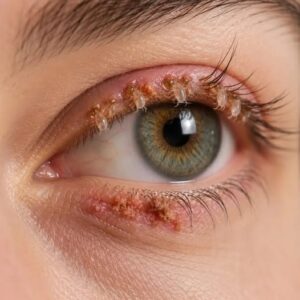
In the modern digital landscape, shocking medical images frequently circulate on social media feeds, capturing attention through fear and curiosity. A prominent example is a viral graphic depicting large, translucent, insect-like organisms clinging to a human eyelid, accompanied by a warning about the hidden dangers of specific sleeping habits or unhygienic environments.
While the image is designed to look like a shocking case of an ocular issue, it is a digitally manipulated or artificial intelligence (AI) generated graphic. Real ectoparasites capable of living near human eyes are microscopic or sub-millimeter in size; they do not appear as large, perfectly transparent, glassy beetles lined up symmetrically along the eyelid border.
Nevertheless, the viral trend highlights a genuine medical phenomenon: Phthiriasis palpebrarum and Demodex infestations. Eyelid health is deeply connected to daily hygiene practices, cosmetic maintenance, and environmental exposures. Understanding the science behind real ocular surface organisms—devoid of internet exaggeration—is essential for maintaining long-term vision health and ocular comfort.
Fact-Checking the Viral Eyelid Image
The graphic circulating online features several anatomical and biological inconsistencies that immediately signal a digital origin rather than a genuine clinical photograph:
-
Exaggerated Scale: The organisms depicted along the upper lid margin are massive relative to the eyelashes and the pupil. No known human ocular parasite reaches this visible magnitude on the skin surface.
-
Unnatural Symmetry and Placement: The insects are neatly arranged side-by-side, facing the same direction, which contradicts the chaotic nature of biological infestations.
-
Anatomical Inaccuracies: The lower eyelid displays uniform, coral-like crusting that lacks the authentic presentation of tissue inflammation, edema, or natural discharge typically observed in acute localized conditions.
-
Absence of Secondary Ocular Symptoms: A true infestation of this scale would cause severe conjunctival injection (bloodshot eyes), significant swelling, and purulent discharge. The sclera and cornea in the image remain perfectly clear and undisturbed.
While the image itself is fraudulent, the clinical conditions it attempts to mimic are real. Parasitic and micro-organism overgrowths on the eyelids cause discomfort and require targeted medical interventions.
Real Eyelid Organisms: Demodex Mites vs. Lice
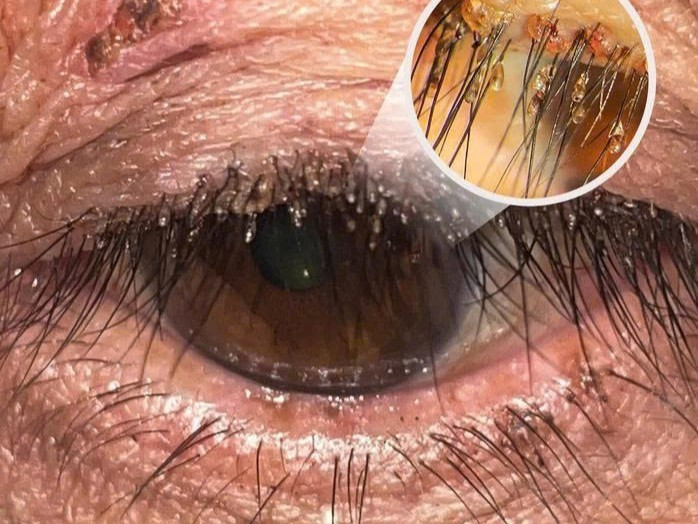
True infestations of the human eyelid generally fall into two distinct categories: microscopic mites that reside within the hair follicles and oil glands, and structural ectoparasites that attach to the shafts of the eyelashes.
1. Demodex Mites (Demodex folliculorum and Demodex brevis)
Demodex mites are microscopic arachnids that form a natural part of the human skin microbiome. They are completely invisible to the naked eye and can only be diagnosed using a high-powered slit-lamp microscope or by analyzing a plucked eyelash under a laboratory lens.
-
Demodex folliculorum: These mites reside primarily in the hair follicles of the eyelashes. They feed on dead skin cells and sebum, and an overgrowth can lead to a condition known as anterior blepharitis.
-
Demodex brevis: These mites live deeper within the sebaceous glands and the Meibomian glands—the specialized oil glands along the eyelid margin responsible for keeping the tear film from evaporating. An overgrowth here can cause posterior blepharitis and severe dry eye symptoms.
2. Phthiriasis Palpebrarum
This is a rare condition caused by Pthirus pubis (commonly known as the crab louse) infesting the eyelashes. Unlike Demodex, these organisms are visible to the naked eye under close inspection, though they look like tiny, translucent-brown flakes or moving dust particles rather than large insects.
-
Mechanism: The claws of these organisms are specifically adapted to grasp hair shafts of a particular diameter, which is why they can survive on eyelashes but rarely on the scalp.
-
Symptoms: This condition produces intense, unyielding itching along the lid margins, reddish-brown tracking marks (from fecal matter), and visible nits (eggs) cemented firmly to the base of the eyelashes.
Causes and Triggers of Eyelid Infestations

Eyelid health issues rarely occur in isolation. They are typically driven by a combination of environmental factors, behavioral habits, and underlying changes in skin chemistry.
Inadequate Removal of Eye Cosmetics
Leaving mascara, eyeliner, or eye shadow on overnight is one of the primary contributors to microbial and mite overgrowth. Cosmetics trap oils, dead skin cells, and environmental pollutants against the lid margin. This accumulation provides an abundant food source for organisms like Demodex, encouraging rapid reproduction and subsequent localized tissue inflammation.
Prolonged Use of Synthetic Eyelash Extensions
While popular for aesthetic reasons, semi-permanent eyelash extensions significantly complicate daily eyelid hygiene. Because individuals fear loosening the adhesive, they frequently avoid thoroughly washing the eyelid area. The dense, synthetic fibers trap sebum, skin flakes, and environmental debris, creating an ideal micro-environment for microbial populations to multiply unchecked.
Neglected Bedding and Personal Linens
Pillowcases and bedsheets accumulate millions of dead skin cells every night. If linens are not regularly laundered in hot water, they can harbor environmental contaminants and facilitate the transfer or persistence of dermatological irritants, aggravating chronic skin and eyelid conditions.
Fluctuations in the Skin Microbiome
Changes in the body’s immune status, chronic stress, underlying systemic dermatological conditions (such as rosacea or seborrheic dermatitis), and hormonal fluctuations can alter the quality and quantity of sebum produced by the Meibomian glands. When sebum production becomes excessive or altered in composition, it disrupts the natural balance of the skin, allowing standard micro-organisms to multiply into a symptomatic infestation.
Clinical Symptoms of Genuine Eyelid Irritation
When the delicate balance of the eyelid margin is disrupted by an overgrowth of mites or bacteria, the body responds with localized inflammatory reactions. Recognizing these early warning signs is vital for preventing long-term damage to the ocular surface.
-
Cylindrical Dandruff (Collarettes): The definitive clinical sign of a Demodex folliculorum overgrowth is the presence of clear, waxy sleeves or collars wrapped around the base of the eyelashes where they emerge from the skin.
-
Persistent Lid Margin Erythema: The edges of the eyelids look chronically red, swollen, and irritated, often resembling a mild sunburn. This condition is frequently misdiagnosed as an allergic reaction or standard conjunctivitis.
-
Foreign Body Sensation: Patients often describe a gritty, sandy, or burning feeling in the eyes that worsens upon waking in the morning. This occurs because the organisms are active during periods of darkness and low eyelid movement.
-
Madarosis and Trichiasis: Severe, prolonged inflammation can damage the eyelash follicles, causing the lashes to fall out prematurely (madarosis) or grow inward toward the cornea (trichiasis), which can scratch the ocular surface and threaten vision.
-
Fluctuating Vision and Severe Dry Eye: When Demodex brevis or chronic bacterial blepharitis compromises the Meibomian glands, the lipid layer of the tear film is reduced. Tears evaporate too quickly, leading to dry eye syndrome, blurred vision, and light sensitivity.
Professional Diagnosis and Medical Treatments
Self-diagnosing eye conditions based on internet trends can lead to inappropriate treatments that damage delicate ocular tissues. A proper evaluation by an optometrist or ophthalmologist is the safest course of action.
Slit-Lamp Biomicroscopy
An eye care professional uses a specialized, high-magnification microscope called a slit lamp to inspect the eyelid margins, eyelash bases, and Meibomian gland orifices. They can visualize the microscopic collarettes indicative of Demodex or detect the physical presence of other issues.
Eyelash Epilation and Microscopic Verification
To confirm a definitive diagnosis, the practitioner may gently remove one or two eyelashes and place them under a laboratory microscope. This allows direct visualization of any microscopic organisms moving along the lash root, confirming the exact nature of the issue.
Targeted Medical Interventions
If a significant overgrowth or structural issue is identified, clinicians rely on specific, regulated therapeutic options:
-
Topical Tea Tree Oil Formulations: Highly purified components of tea tree oil, such as Terpinen-4-ol, are used in clinical-grade eyelid wipes and foams to eradicate Demodex mites. Raw, undiluted tea tree oil should never be applied directly to the eyes, as it causes severe chemical burns to the cornea.
-
In-Office Microblepharoexfoliation: Utilizing a specialized medical instrument featuring a microscopic, rotating sponge, the practitioner thoroughly cleanses the lid margins, mechanically removing all crusts, biofilms, and organism habitats.
-
Prescription Antiparasitic and Antibiotic Ointments: For specific structural ectoparasites or secondary bacterial infections, targeted ophthalmic ointments are applied to the lid margins to disrupt the reproductive cycles of the organisms and eliminate accompanying pathogens.
Comprehensive Preventative Eye Hygiene Regimen
Maintaining optimal eyelid health requires consistent, daily habits that prevent the accumulation of organic debris and minimize microbial overgrowth.
1. Execute a Dedicated Mechanical Cleansing Routine
Every evening, all eye makeup must be completely removed using a gentle, oil-free, non-irritating cleanser. Following makeup removal, the eyelid margins should be cleansed with a dedicated ophthalmic wipe or foam formulated specifically for sensitive ocular tissues.
2. Implement Regular Warm Compresses
Applying a clean, warm compress to closed eyelids for five to ten minutes helps liquefy solidified oils trapped within the Meibomian glands. This encourages the natural flow of healthy lipids, prevents gland blockages, and keeps the eyelid environment less hospitable to opportunistic organisms.
3. Maintain Strict Cosmetic and Applicator Hygiene
Eye cosmetic products should be discarded and replaced every three to six months to prevent microbial contamination. Makeup brushes and applicators must be washed thoroughly each week with an antibacterial cleanser, and cosmetics should never be shared between individuals.
4. Practice Regular Linen Sanitation
Pillowcases, sheets, and face towels should be washed at least once a week in hot water ($60^\circ\text{C}$ or $140^\circ\text{F}$) and dried on a high-heat cycle. This kills any accumulated micro-organisms and removes the dead skin flakes that serve as their primary food source.
Conclusion: Practice Digital Discernment and Ocular Care
The alarming images of giant, glassy creatures lined up perfectly on human eyelashes are products of digital fabrication designed to generate clicks and views. However, the underlying message regarding the importance of eyelid health is completely accurate.
Microscopic organisms are a natural part of human biology, but poor cosmetic habits, neglected hygiene, and uncleaned bedding can turn a harmless population into a frustrating clinical issue. By practicing daily eyelid hygiene, removing makeup completely before sleep, and consulting eye care professionals at the first sign of persistent irritation, you can protect your eyes from real ocular health challenges.