Most People Use Green Onions Every Day — But Each Cutting Style Actually Has A Different Purpose In Cooking
Green onions may look simple, but professional chefs say the way they are cut can dramatically affect:
- flavor strength,
- texture,
- appearance,
- and even how quickly aroma spreads through the food.
That’s why restaurants carefully choose different cutting styles depending on the dish being prepared.
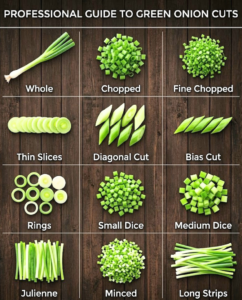
Whole Green Onion
Keeping green onions whole is mostly used for:
- soup broth,
- grilling,
- steaming fish,
- and slow-cooked dishes.
Whole stalks release flavor gradually and are often removed before serving.
Chopped
Regular chopped green onions are the most common style for:
- fried rice,
- noodles,
- soups,
- eggs,
- and stir-fries.
They add fresh onion flavor without overpowering the dish.
Fine Chopped
Finely chopped green onions spread flavor faster and blend more smoothly into food.
Perfect for:
- dipping sauces,
- omelets,
- ramen toppings,
- and garnishing.
Because the pieces are tiny, the aroma becomes stronger and more evenly distributed.
Thin Slices
Thin round slices are often used in:
- pho,
- salads,
- seafood dishes,
- and Asian soups.
This cut creates a softer texture and a lighter onion flavor.
Diagonal Cut
Diagonal cuts are popular because they:
- look more elegant,
- expose more surface area,
- and absorb sauces better.
Commonly used in:
- stir-fried beef,
- Chinese dishes,
- and restaurant-style plating.
Bias Cut
Bias cuts are longer and sharper-looking than standard diagonal cuts.
Chefs often use them for:
- decorative presentation,
- noodle dishes,
- and high-heat stir-fries.
This style makes green onions appear larger and more visually appealing.
Rings
Ring-shaped cuts are often used as:
- toppings,
- garnishes,
- or salad decorations.
They add crunch and make dishes look fresher and more colorful.
Small Dice
Small diced green onions distribute flavor evenly through dishes like:
- fried rice,
- dumpling fillings,
- sauces,
- and savory pancakes.
Medium Dice
Medium dice provides stronger texture and more noticeable onion bites.
Often used in:
- stuffing,
- savory mixes,
- and sautéed dishes.
Julienne
Julienne cuts create long thin strips often used for:
- garnishing,
- Korean dishes,
- sushi toppings,
- and decorative plating.
This style adds freshness and visual elegance.
Minced
Minced green onions are chopped extremely fine and almost melt into sauces or fillings.
Perfect for:
- marinades,
- dipping sauces,
- meat mixtures,
- and dressings.
Long Strips
Long strips are usually used for:
- grilling,
- wrapping foods,
- hotpot,
- and decorative presentation.
They stay crisp longer and create stronger aroma when heated.
Professional cooks say learning how to cut green onions properly may seem small, but it can instantly make homemade food:
- taste more balanced,
- look more professional,
- and absorb flavor differently.
Many people online admitted they never realized:
the exact same green onion can completely change a dish depending on how it’s sliced.