The Secret Superfood: Why This Leafy Green Beats Beef for Minerals
King of Iron and Calcium: Meet the Underrated Malabar Spinach For decades, we’ve been told that red meat and seafood…
28/03/2026 13:45
The hidden reality of what is inside your daily refreshments is more concerning than most people realize. Recent scientific breakthroughs in 2024 and 2025 have pulled back the curtain on “invisible” pollutants that we consume by the thousands with every sip.
While we often worry about sugar or caffeine, a new silent invader has taken center stage: microplastics and nanoplastics. These tiny fragments, often smaller than a human cell, are now confirmed to be present in nearly every beverage on the market. However, two specific types of drinks have been identified as the worst offenders.
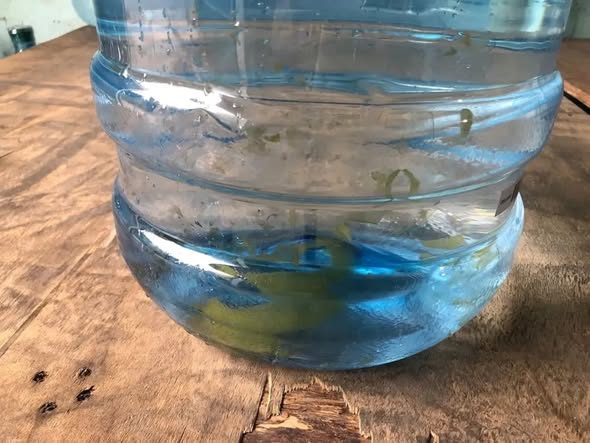
For years, we believed bottled water was the “cleaner” alternative to tap water. However, a landmark study published in the Proceedings of the National Academy of Sciences (PNAS) has completely flipped this narrative.
Researchers using advanced laser-imaging technology found that a single liter of bottled water contains an average of 240,000 plastic particles. Even more alarming is that 90% of these are nanoplastics—particles so small they can bypass the digestive tract, enter the bloodstream, and potentially lodge themselves in vital organs like the heart and brain.

Packaging Leaks: The PET (polyethylene terephthalate) used in most bottles sheds fragments into the water during storage, especially if exposed to sunlight or heat.
The Cap Factor: The simple act of twisting a plastic cap open and closed generates significant friction, shearing off microscopic plastic “dust” directly into the liquid.
Industrial Filtration: Surprisingly, the very filters used to “purify” the water are often made of plastic (polyamide/nylon), which can break down and end up in the final product.
If bottled water is the leader in quantity, hot beverages in disposable cups are the leaders in chemical release. A 2025 study from the University of Birmingham revealed that heat is the primary driver for plastic migration.
Most people feel better using a paper cup, but these cups are almost always lined with a thin layer of plastic (polyethylene) to prevent leaking. When you pour boiling water ($100°C$) into these cups:
The plastic lining softens and degrades instantly.
A single cup of hot tea or coffee can release millions of microplastic particles in under 15 minutes.
Tea Bags: Premium “silken” tea bags are often made of plastic mesh. Steeping these in hot water is essentially “plastic soup,” releasing billions of nanoplastics per cup.
While the long-term effects on humans are still being studied, the medical community has raised significant red flags. Current research suggests that these particles may lead to:
Metabolic Disruption: Certain plastics act as “obesogens,” interfering with how our bodies store fat and process energy.
Oxidative Stress: Once inside cells, nanoplastics can trigger inflammation and damage DNA.
Chemical Hitchhikers: Microplastics often “soak up” other toxins from the environment, like heavy metals or pesticides, carrying them directly into our systems.
You don’t have to give up your favorite drinks, but you should change how you consume them.
| Action | Safer Alternative |
| Ditch Single-Use Plastic | Use Stainless Steel or Glass bottles. |
| Stop Microwaving Plastic | Only use ceramic or glass for heating. |
| Filter Your Tap | Use a Reverse Osmosis (RO) filter or an NSF/ANSI 401 certified filter. |
| Brew Smarter | Use loose-leaf tea with a metal strainer instead of tea bags. |
| Bring Your Own Cup | Ask your barista to fill your reusable ceramic or steel mug. |
King of Iron and Calcium: Meet the Underrated Malabar Spinach For decades, we’ve been told that red meat and seafood…

The safety pin is one of the most common household tools—simple, reliable, and used by millions every day. From fixing…

If you’ve ever checked into a hotel room, you’ve likely noticed a decorative strip of fabric placed neatly across the…
The hidden reality of what is inside your daily refreshments is more concerning than most people realize. Recent scientific breakthroughs…
Headlines claiming that “cancer dies when you eat certain foods” often spread quickly online, attracting attention and hope. While nutrition…

Maintaining a healthy lifestyle after a major health milestone is a priority for many. When it comes to supporting the…