A simple trick to tell real honey from fake: Just flip the bottle upside down
Honey has long been valued for its rich nutrients, natural sweetness, and impressive health benefits. It’s used in everything from traditional remedies to daily wellness routines. But as demand continues to rise, the supply of genuine honey cannot keep up. This gap creates an opportunity for dishonest sellers who introduce counterfeit or adulterated honey into the market. Unfortunately, fake honey is becoming more common – and because the production of honey is costly, imitation products are often sold at similar prices, giving these sellers a large profit margin.
So how can consumers protect themselves and ensure the honey they buy is real? Fortunately, distinguishing authentic honey from fake honey is not as difficult as it may seem.
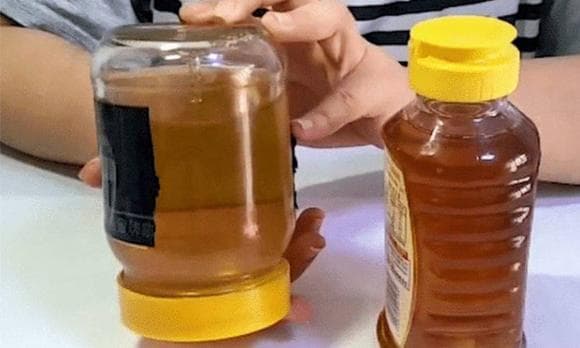
1. The “Flip-and-Bubble” Test: Shake the Bottle Three Times
Most honey is sold in transparent bottles, which allows you to perform a quick and clever test before buying it.
How to do it:
Hold the honey bottle firmly.
Shake it up and down three times.
Flip the bottle upside down and observe the movement of the honey and the air bubbles inside.
What to look for:
Real honey creates bubbles that rise slowly from the bottom. These bubbles are stable and do not disappear quickly. In many cases, they may take one to two hours to fully disperse because natural honey is dense and viscous.
Fake honey either produces no bubbles or bubbles that rise immediately and disappear almost instantly. This usually means the honey has been diluted with sugar syrups or other additives, reducing its natural thickness.
If the honey you are inspecting shows such suspicious behavior, it is best not to purchase it.
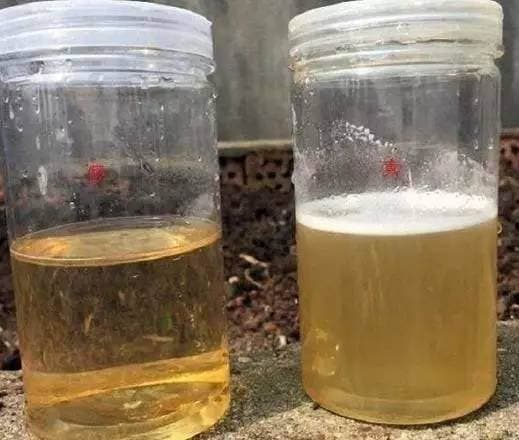
2. The Water Drop Test: Real Honey Does Not Dissolve Quickly
If you want further confirmation, try this simple test at home with a glass of water.
How to do it:
Fill a glass with room-temperature water.
Dip a spoon into the honey.
Slowly let the honey fall into the center of the glass.
What to look for:
Real honey sinks to the bottom in a thick, cohesive stream and does not dissolve immediately.
It tends to settle as a clump because of its high viscosity and natural sugar structure.
Fake or diluted honey dissolves quickly upon contact with water. This is a sign that the honey contains added water, syrups, or artificial sweeteners.
If your honey blends into the water instantly, it’s likely not pure.
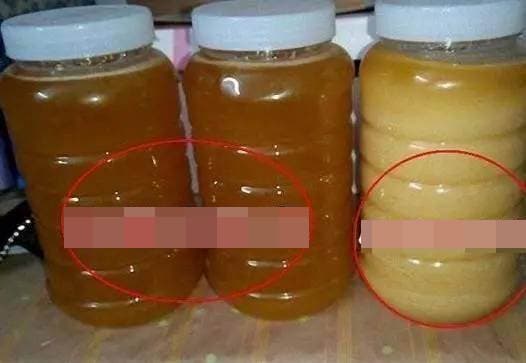
3. The Crystallization Test: Real Honey Naturally Crystallizes
Crystallization is one of the clearest signs of genuine honey.
Facts about crystallization:
Pure honey crystallizes when the temperature drops below 14°C (57°F).
At temperatures above 20°C (68°F), these crystals gradually melt and return to a liquid form.
The texture of natural honey crystals is fine and smooth — something counterfeit honey cannot fully replicate.
Crystallization does not mean honey has gone bad. It is a natural process, and each honey variety crystallizes at its own rate depending on its floral source.
If a bottle of honey never crystallizes despite cold temperatures, it may have been overly processed or adulterated.
4. Why These Methods Work: The Science Behind Real Honey
Real honey is made by bees through natural enzymatic processes. It contains:
Fructose and glucose in balanced proportions
Bee enzymes like invertase, which break down sugars
Trace minerals and pollen particles
Natural antioxidants
These components make honey dense, slow-moving, and non-soluble in water at first contact — characteristics that fake honey cannot perfectly imitate.
Counterfeit honey often contains:
Sugar syrups (corn syrup, rice syrup, maltose)
Excess water
Artificial coloring or thickeners
These substances change the physical behavior of honey, especially its viscosity, bubble formation, and crystallization pattern.
Conclusion: Three Simple Steps to Spot Fake Honey
To avoid being deceived by low-quality or fake products, remember these steps the next time you shop:
1. Shake the bottle three times and flip it upside down – real honey forms slow-moving bubbles.
2. Drop a spoonful into water – real honey sinks without dissolving quickly.
3. Check for natural crystallization – genuine honey will crystallize at lower temperatures.
By combining all three methods, you can confidently identify pure honey and avoid the fake alternatives flooding the market.
Choosing real honey not only protects your health but also supports ethical beekeepers who produce high-quality honey the right way.
For centuries, garlic has been one of the most valued natural ingredients in traditional medicine and folklore. Known scientifically as Allium sativum,…