The Hidden Risk in Every Hotel Room
No matter how luxurious, highly rated, or pristine a hotel appears, every room hosts a high volume of human turnover. Guests from all over the world come and go, bringing hidden hitchhikers along with them. We are talking about microscopic pests that excel at hiding in fabric, wood, and upholstery.
The biggest threat to a traveler is inadvertently bringing these tiny hitchhikers back home. Once they infest your personal belongings, eradicating them can cost thousands of dollars and cause months of intense stress.
Why the Main Room is a Danger Zone
When you place your bags on the bed, the upholstered chairs, or the carpet, you are placing your belongings directly into prime real estate for these pests. They thrive in soft, fibrous environments where they can easily blend in and stay close to a host.
-
The Bed: The absolute highest risk area. Soft sheets, mattress seams, and headboards are their primary habitats.
-
The Luggage Rack: Surprisingly unsafe. Wooden stands have tiny cracks and joints where pests hide, and fabric-strapped stands offer perfect camouflage.
-
The Carpet: Deep fibers allow tiny pests to move unseen and cling to the bottom of your bags.
Why the Bathtub is the Safest Zone
The bathroom—specifically the bathtub or a tiled shower enclosure—is a hostile environment for tiny creeping pests. Utilizing this space when you first arrive serves as a brilliant preventative measure.
1. Slippery Porcelain and Ceramic
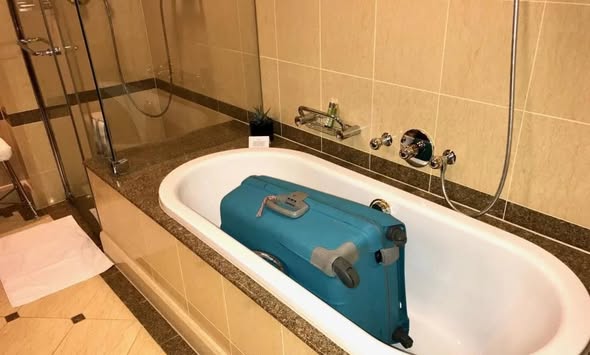
Tiny crawling pests do not have suction pads on their legs; they rely on claws to grip textured surfaces like fabric, wood, and drywall. The smooth, polished surface of a bathtub or a tiled shower stall is practically impossible for them to scale. If you place your bag inside the tub, any pests lurking in the room cannot climb up and crawl inside your zippers.
2. High Visibility

Most hotel bathtubs and showers are bright white or light beige. Because these nocturnal pests are typically dark brown or reddish-brown, they stick out like a sore thumb on a clean, light surface. By placing your suitcase in the tub, you can easily inspect the exterior of your bag and the surrounding area for any suspicious movement.
3. Absolute Isolation
By keeping your bags in the bathroom while you conduct your initial room inspection, you ensure that your clean clothes and personal items remain completely isolated from any potential infestations in the bedroom area.
Step-by-Step: The Perfect Room Check Routine
To travel with complete confidence, change your arrival routine by following this professional five-step checklist the moment you get your room key.
Step 1: The Bathroom Staging
Do not stop in the bedroom. Walk straight down the hallway and place all of your rolling bags, backpacks, and purses directly into the dry bathtub or shower stall. Leave them there until you have fully vetted the rest of the room.
Step 2: Inspect the Mattress Seams
Head over to the bed and pull back the sheets, comforter, and the mattress protector. Pay incredibly close attention to the four corners of the mattress. Look closely at the piping, seams, and fabric tags. You are looking for tiny dark spots, discarded outer shells, or the pests themselves, which look like small apple seeds.
Step 3: Check the Headboard and Nightstands
Gently lean behind the headboard if it is not permanently attached to the wall. Check the crevices of wooden nightstands, especially inside the drawers and around the joints.
Step 4: Examine Soft Furniture
Inspect any upholstered armchairs, desk chairs, and the curtains. Check the seams of decorative pillows and the baseboards running along the perimeter of the carpeted floor.
Step 5: Unpack Wisely
If the room passes your inspection, you can bring your bags out. However, many safety experts suggest keeping your suitcase closed and elevated on a hard desk or dresser throughout your stay, rather than leaving it wide open on the floor.
Additional Travel Hygiene Tips for Peace of Mind
Beyond using the bathtub trick, you can implement a few more clever strategies to keep your belongings pristine throughout your journey.
-
Use Plastic Trash Bags: Pack a few large, heavy-duty trash bags in your suitcase. You can wrap your entire suitcase inside a plastic bag before placing it on a luggage rack for an extra layer of impenetrable armor.
-
Keep Dirty Laundry Sealed: Bring a dedicated, sealable wet-bag or plastic bag for your worn clothing. Dirty laundry attracts pests much faster than clean clothes due to residual scent and sweat.
-
Inspect Your Bags Upon Returning Home: When your vacation ends, do not unpack on your bed or living room carpet. Open your suitcase in your garage, laundry room, or even your own bathtub. Immediately toss your clothes into a hot wash and dry cycle, which naturally eliminates any hitchhikers.
Conclusion: A Small Habit for Big Protection
Taking thirty seconds to place your suitcase in the bathtub when you check into a hotel might feel silly at first, but it is a powerful habit practiced by global frequent flyers. It costs nothing, requires zero special equipment, and provides an immediate defensive barrier against the nightmare of bringing unwanted pests into your home.
The next time you open your hotel room door, bypass the inviting mattress, walk straight to the bathroom, and drop your bags in the tub. Your future self will thank you.