
The Truth About Cold Meals
Is keeping your dinner until tomorrow a major hazard? You might have seen terrifying stories circulating on social media warning…
31/05/2026 13:18
Have you ever explored an old cabinet at your grandparents’ house and stumbled upon small, metallic objects that look like tiny helmets? we see a collection of four textured silver caps resting on a wooden surface.
The text in asks a question that many people face when clearing out ancestral homes: “Does anyone have a clue what these are… found in my grandmother’s crockery cupboard.” While they might look like decorative items, miniature drinking cups, or rare collectibles, these objects are classic sewing thimbles.
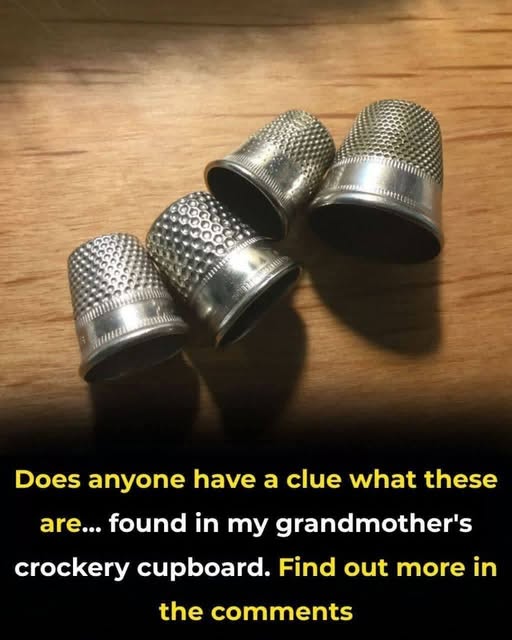
A thimble is a small protective shield worn on the finger or thumb during manual stitching. Its primary purpose is to protect the skin from being pierced by the back end of a needle while pushing it through dense fabrics like denim, leather, or canvas.
Dimpled Surface: The pitted, textured exterior prevents the needle from slipping out of control.
Ergonomic Design: They feature a slightly conical shape to fit snugly over a fingertip.
Durable Materials: While modern thimbles are often made of rubber or plastic, vintage versions are typically crafted from brass, silver, steel, or porcelain.
It is common to find everyday sewing tools tucked away in unexpected places like kitchen cabinets or dining room sideboards. In traditional households, the dining table often doubled as a spacious workspace for cutting fabric and repairing family garments. Keeping a small stash of thimbles, threads, and needles in a nearby cupboard allowed quick access for evening repairs after dinner was cleared away.
Thimbles have a rich history dating back thousands of years to ancient Egypt and China. By the 18th and 19th centuries, silver thimbles became a popular gift for women, symbolizing domestic skill, industriousness, and elegance.
If you discover thimbles similar to the ones pictured they could hold historical or monetary value.
Material Markings: Look inside the rim for tiny stamps (hallmarks) indicating sterling silver, gold plating, or maker marks.
Design Intricacy: Thimbles with hand-engraved patterns, scenic landscapes, or gemstone caps are highly sought after by collectors.
Condition: Items free of deep dents, cracks, or heavy corrosion command higher interest in the antique community.
If you want to keep these family heirlooms looking brilliant, proper maintenance is essential.
Avoid Harsh Chemicals: Do not use abrasive scrubbers or strong chemical dips that can strip away historic patinas.
Gentle Washing: Use warm water mixed with a drop of mild dish soap and a soft-bristled toothbrush to clean out dust from the tiny dimples.
Dry Thoroughly: Moisture can cause tarnishing or rust depending on the metal composition. Always dry the items completely with a soft microfiber cloth.
Finding these small relics connects us directly to the craftsmanship and daily routines of past generations. Instead of letting them gather dust, they can be displayed proudly as unique pieces of family history.
Is keeping your dinner until tomorrow a major hazard? You might have seen terrifying stories circulating on social media warning…

Psychology experts often say that the things we are naturally drawn to can reflect hidden parts of our personality. Colors,…

Most people rarely pay attention to their stool unless something looks unusually different. However, doctors say that changes in stool…

Have you ever explored an old cabinet at your grandparents’ house and stumbled upon small, metallic objects that look like…

Have you ever woken up in the middle of the night, fully conscious, only to realize you cannot move a…
Introduction to Palmistry and the Rare Letter M Have you ever looked closely at the lines on your hand and…