Why Do Bath Towels Have Those Lines? The Hidden Purpose You Never Knew
Have you ever wondered about those flat, woven bands near the edges of your favorite bath towels? You are definitely not alone. A viral social media trend has everyone staring at their linen closets, realizing that most people go their entire lives without knowing what those lines actually mean.
Some think they are folding guides, others guess they are for scrubbing, and many assume they are just a random design choice. The truth is actually a mix of smart textile engineering, history, and daily convenience.
Here is everything you need to know about those mysterious towel bands, why they exist, and how they change the way you care for your linens.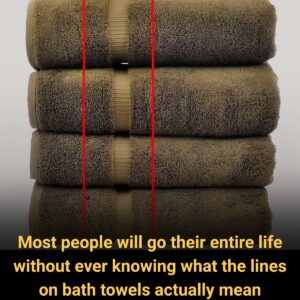
What Are Those Lines on Towels Called?
In the textile industry, those flat, woven lines are not just random decorations. They have specific technical names depending on how they are made and where they are located.
-
The Dobby Border: This is the most common name for the flat, decorative band running across the width of a towel. It is woven using a special mechanism called a dobby loom, which allows the machine to switch from the fluffy loops to a flat, tight weave.
-
The Cam Border: Similar to a dobby border, a cam border is a simple, flat band usually found at the very edges of budget-friendly or commercial towels (like the ones used in institutional settings).
-
The Fancy Border: When the line includes intricate patterns, velvet-like textures, or shiny metallic threads, it is often referred to in production as a decorative or fancy border.
The Real Reasons Bath Towels Have Lines
While clickbait posts love to claim there is a “secret hidden function” that will change your life, the reality comes down to smart product design and manufacturing history. Here are the true purposes behind those lines.
1. Structural Integrity and Shape Retention

The primary reason for the dobby border is to keep the towel from losing its shape.
Standard bath linens are covered in terry loops—the loose, uncut loops of thread that give towels their fluffiness and absorbency. Because terry loops are loose, they can stretch, pull, and warp over time, especially after dozens of cycles through a washing machine and high-heat dryer.
By weaving a tight, flat band of solid fabric near the ends, manufacturers create a structural anchor. This flat section acts as a barrier that prevents the edges from stretching out at a different rate than the rest of the fabric, stopping the dreaded “hourglass effect” where the middle of your towel shrinks but the ends flare out.
2. Preventing Fraying and Unraveling
The ends of a towel take the most abuse. They get tugged on when you dry off, pulled out of tight spaces, and spun aggressively in laundry appliances. The dense weave of the border provides a secure transition zone before the fabric reaches the hemmed edge, drastically reducing the risk of the loose loops unraveling from the ends.
3. Aesthetics and Visual Appeal
Let’s face it: a solid sheet of plain terry loops can look a bit like a basic piece of industrial fabric. The flat border breaks up the visual monotony of the texture, giving the item a finished, polished look. It frames the plush texture, making it look attractive when hung over a rod or stacked neatly on a shelf.
4. Commercial Sorting and Grading

In massive commercial operations—like those run by luxury hospitality venues or professional cleaning services—sorting thousands of pieces of linen a day is a massive chore.
Often, different qualities, sizes, or departments are designated by the number or style of the lines on the border. For instance, a gym towel might have one simple line, while a premium spa wrap might feature three distinct decorative bands. This allows staff to sort items instantly by eye without checking tags.
Debunking the Internet Myths
Because of viral images circulating online, several wild theories have popped up. Let’s set the record straight on what those lines cannot do.
| Myth |
Reality |
| They are built-in folding guides. |
While they can help you align your folds visually, towels are manufactured in dozens of different lengths, and the bands are placed purely based on standard loom settings, not custom folding math. |
| They are meant for exfoliating skin. |
The flat weave is actually rougher and less absorbent than the plush loops. Using the border to scrub your skin can cause unnecessary irritation. |
| They tell you which side is for your face. |
Both sides of a standard dobby border look and feel almost identical. They are not intended to separate your head-to-toe drying routine. |
How to Care for Towels with Decorative Borders
Because the flat band is woven differently than the rest of the fabric, it can sometimes shrink at a slightly different rate if exposed to harsh conditions. This can cause the border to pucker or pull tight, making the item look warped.
To keep your linens looking like they belong in a five-star resort, follow these simple maintenance tips:
-
Avoid Excessive Heat: High heat is the enemy of cotton fibers. Dry your items on a medium or low setting to prevent the dense border from shrinking faster than the loose loops.
-
Skip the Fabric Softener: Liquid softeners coat the fibers in a slick film, which reduces absorbency over time and can make the flat borders feel stiff and greasy.
-
Give Them a Shake: Before tossing them into the dryer and right after taking them out, give each piece a firm snap. This fluffs up the loops and helps stretch out the flat woven lines so they dry straight and even.
Ultimately, those lines are a testament to brilliant textile design—combining structural support with a classic look that has stood the test of time. Now, the next time you spot them in your bathroom, you will know exactly why they are there!