The Hidden Gems of Vietnamese Cuisine: A Deep Dive into Offal Delicacies
Introduction: A Culinary Tradition Like No Other
When you think of Vietnamese food, your mind might immediately go to a steaming bowl of Phở or a crunchy Bánh Mì. However, for the locals, the true soul of the kitchen often lies in parts of the animal that international travelers might find “surprising.” Among the most beloved—yet often misunderstood—ingredients are pork offal, specifically the small intestines and blood pudding.
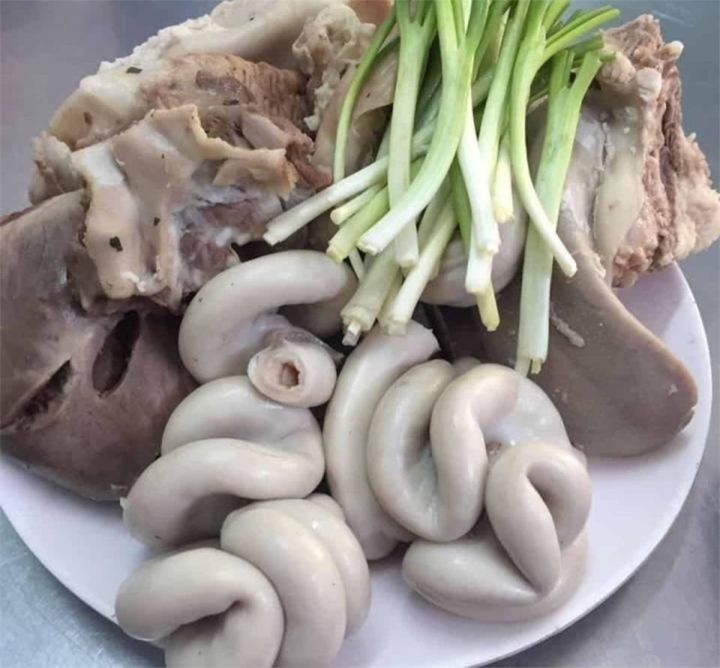
While some might label these as the “dirtiest” parts, in Vietnamese culture, they are celebrated as delicacies. When prepared with skill and precision, these ingredients offer textures and flavors that are unmatched by standard cuts of meat.
1. The Art of the Small Intestine
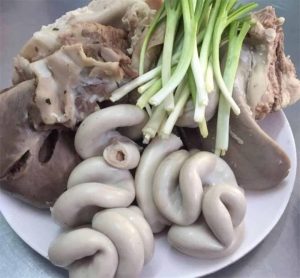
The small intestine, or Phèo Non, is a staple in Vietnamese “Nhậu” (social drinking) culture and breakfast tables alike.
Why is it so popular? The appeal lies in the texture. A perfectly cooked small intestine is tender yet slightly chewy, with a creamy, rich filling known as “cháo.” It’s not just food; it’s a sensory experience.
Preparation is Key To ensure the best flavor, the cleaning process is rigorous. Chefs use salt, lemon, and ginger to neutralize any strong odors, ensuring the final product is fresh and savory. It is often served boiled with a side of fish sauce, ginger, and aromatic herbs like coriander and Thai basil.

2. The Richness of Blood Pudding
The second “surprising” favorite is blood-based dishes. In the image, you see(blood sausage) and cooked blood cubes.
-
Dồi Huyết: This is a masterful blend of pork blood, minced fat, mung beans, and a variety of local herbs stuffed into an intestine casing. It is then steamed or boiled, resulting in a savory, earthy sausage that melts in your mouth.
-
The Nutritional Aspect: Traditionally, these dishes were prized for being iron-rich. While modern diners focus more on the taste, the cultural heritage of “using the whole animal” remains a point of pride in Vietnamese sustainability.
3. Three Surprising Facts About These Delicacies
Fact 1: It’s a Symbol of Hospitality
In many rural areas of Vietnam, when a family hosts a special guest, they will prepare a “Lòng Lợn” (pork offal) platter. Serving these parts shows that the host has put in a great deal of effort into the meticulous cleaning and preparation process, signaling deep respect for the guest.
Fact 2: The Perfect Pairing with Herbs
Vietnamese cuisine is all about balance. Because offal is rich and fatty, it is always served with an abundance of “rau thơm” (aromatic herbs). These herbs, such as mint, perilla, and knotweed, act as a natural palate cleanser and aid in digestion.
Fact 3: A Breakfast of Champions
While many Westerners prefer cereal or toast, a very popular breakfast in Vietnam is Cháo Lòng (Offal Rice Porridge). It is a warm, comforting, and nutrient-dense meal that provides enough energy to last through a hard day’s work. It’s the ultimate comfort food for millions.